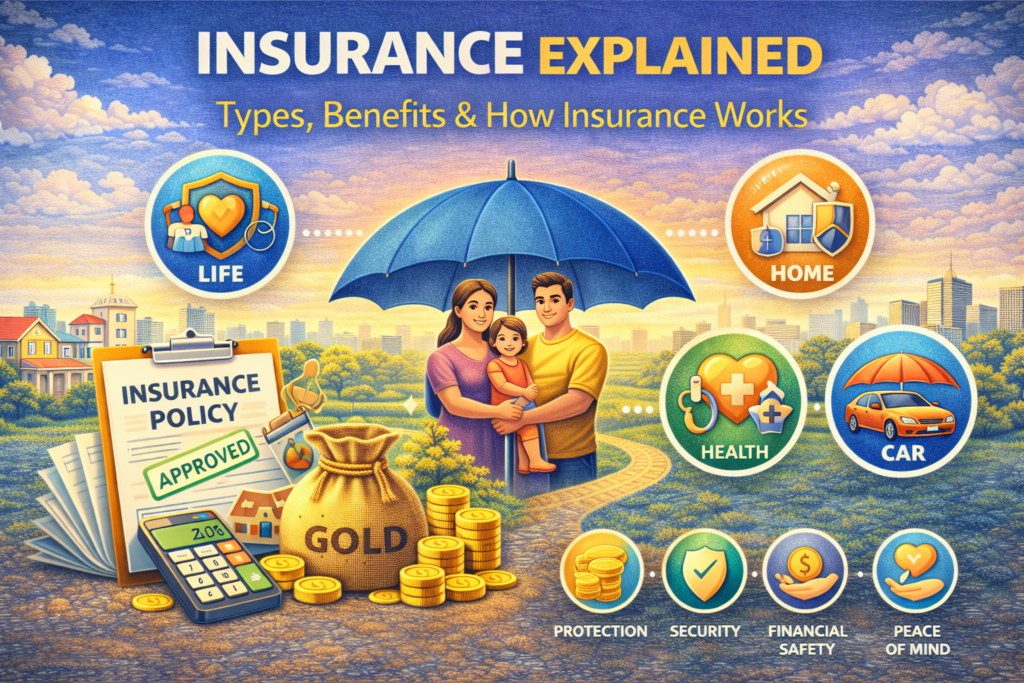
Insurance is one of the most important tools in personal and financial planning. Life is full of uncertainties such as accidents, health issues, natural disasters, and unexpected financial losses. Insurance helps individuals and families manage these risks by providing financial protection during difficult times. At its core, how insurance works on the principle of risk sharing. A large group of people contribute small amounts of money, called premiums, to an insurance company. In return, the insurer provides financial support to those who face covered losses. This system reduces the financial burden on individuals and helps maintain stability.
This article explains what insurance is, how it works, different types of insurance, and why insurance is important, in a clear and beginner-friendly manner.
What Is Insurance?
Insurance is a legal contract between an individual (policyholder) and an insurance company (insurer). Under this contract, the policyholder pays regular premiums, and the insurer agrees to compensate for specific losses, damages, or expenses as defined in the policy.
The purpose of insurance is not to make a profit for the policy holder but to provide financial protection and peace of mind.
How Insurance Works
Insurance works through a structured process:
- The policy holder selects an insurance plan
- Regular premiums are paid to the insurer
- The insurer pools premiums from many policyholders
- When a covered event occurs, a claim is filed
- The insurer compensates the policyholder as per policy terms
This system spreads risk across many people, making large losses manageable.
Key Terms Used in Insurance
Understanding basic insurance terms helps in better decision-making.
- Premium: Amount paid periodically for insurance coverage
- Policy: Legal document detailing coverage and terms
- Sum Assured: Maximum amount payable under the policy
- Claim: Request for compensation after a loss
- Deductible: Amount paid by the policyholder before insurer pays
Types of Insurance
Insurance can be broadly classified into life insurance and general insurance.
Life Insurance
Life insurance provides financial protection to the family of the policy holder in case of death. Some plans also offer savings or investment benefits.
Types of Life Insurance
Term Insurance
Term insurance provides coverage for a specific period.
Features:
- High coverage at low cost
- Pays benefit only in case of death during the term
- No maturity benefit
Term insurance is considered one of the most essential insurance plans.
Whole Life Insurance
Whole life insurance provides coverage for the entire lifetime of the policy holder.
Benefits:
- Lifetime coverage
- Savings component
- Suitable for long-term planning
Endowment Plans
Endowment plans combine insurance and savings.
Key points:
- Pays maturity benefit if policyholder survives
- Provides death benefit during policy term
- Higher premiums compared to term plans
Unit Linked Insurance Plans (ULIPs)
ULIPs combine insurance and market-linked investment.
Features:
- Investment in equity or debt markets
- Long-term wealth creation potential
- Returns depend on market performance
Health Insurance
Health insurance covers medical expenses arising from illness or accidents.
What Health Insurance Covers
- Hospitalization costs
- Surgery and treatment expenses
- Pre- and post-hospitalization expenses
- Day-care procedures
Health insurance helps manage rising healthcare costs effectively.
Types of Health Insurance
Individual Health Insurance
Covers a single person.
Family Floater Health Insurance
Covers multiple family members under one policy.
Senior Citizen Health Insurance
Designed for elderly individuals with age-specific coverage.
General Insurance
General insurance covers assets and liabilities other than life and health.
Motor Insurance
Motor insurance provides coverage for vehicles against damage, theft, or accidents.
Types
- Third-party insurance
- Comprehensive insurance
Motor insurance is mandatory in many countries.
Home Insurance
Home insurance protects residential property and belongings against risks such as fire, theft, or natural disasters.
Travel Insurance
Travel insurance covers risks associated with travel.
Covers:
- Medical emergencies abroad
- Trip cancellations
- Loss of baggage
Business and Liability Insurance
Businesses use insurance to protect against operational risks.
Common Types
- Property insurance
- Liability insurance
- Employee insurance
These policies help businesses manage unexpected losses.
Importance of Insurance
Insurance plays a crucial role in financial security.
Key Benefits
- Financial protection against risks
- Reduces out-of-pocket expenses
- Provides peace of mind
- Supports long-term planning
Insurance ensures that unexpected events do not disrupt financial stability.
Insurance vs Savings
Insurance and savings serve different purposes.
| Aspect | Insurance | Savings |
|---|---|---|
| Purpose | Risk protection | Wealth accumulation |
| Usage | During emergencies | Planned expenses |
| Nature | Protective | Growth-oriented |
Both are important and should complement each other.
Factors to Consider Before Buying Insurance
Before purchasing insurance, consider:
- Coverage amount
- Premium affordability
- Policy exclusions
- Claim settlement process
- Insurer’s reputation
Choosing the right policy requires careful evaluation.
Common Insurance Mistakes to Avoid
- Buying insufficient coverage
- Ignoring policy terms
- Delaying insurance purchase
- Relying only on employer insurance
Avoiding these mistakes improves financial security.
Digital Insurance and Online Policies
Insurance services are increasingly digital.
Benefits of Online Insurance
- Easy comparison
- Faster purchase
- Paperless documentation
- Transparent pricing
Digital platforms have made insurance more accessible.
Role of Insurance in Financial Planning
Insurance forms the foundation of a strong financial plan.
- Protects income and assets
- Supports dependents
- Enables risk-free investing
Without insurance, financial plans remain incomplete.
Frequently Asked Questions (FAQs)
Is insurance mandatory?
Some types like motor insurance are legally required.
Can one person have multiple insurance policies?
Yes, individuals can hold multiple policies.
Does insurance cover all risks?
Coverage depends on policy terms and exclusions. how insurance works
Is insurance an investment?
Some plans have investment components, but the primary purpose is protection.
Conclusion
Insurance is a vital component of financial well-being. It provides protection against life’s uncertainties and ensures that unexpected events do not lead to financial hardship. how insurance works, With various types of insurance available—life, health, motor, home, and travel—individuals can choose coverage that suits their needs and lifestyle.
Understanding how insurance works and selecting appropriate policies helps build a secure and resilient financial future. Insurance is not an expense but a necessary safeguard for long-term stability.
Disclaimer
This article is for informational and educational purposes only. Insurance terms, coverage, and eligibility vary by insurer and region. Always review policy documents carefully before purchasing insurance.