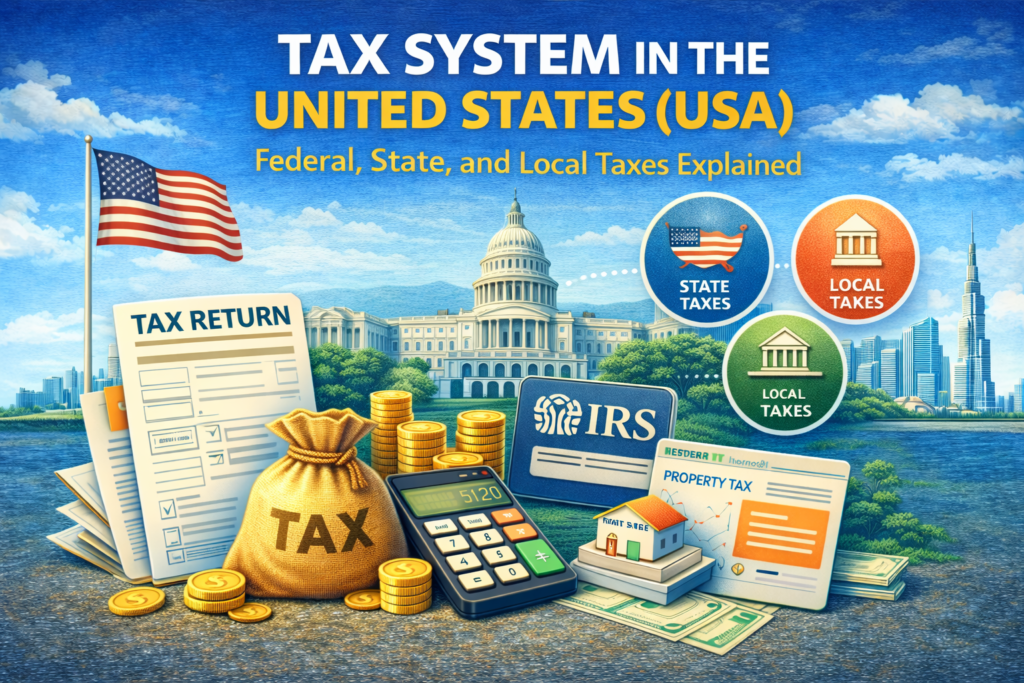
The tax system in the USA is one of the most complex and structured systems in the world. Unlike many countries that rely mainly on national-level taxation, the US follows a multi-layered tax structure involving federal, state, and local governments. Each level has the authority to collect certain types of taxes, which together fund public services, infrastructure, and government operations.
Taxes in the USA affect individuals, businesses, and organizations in different ways depending on income level, location, and financial activity. Understanding how the tax system in the usa works helps taxpayers comply with the law, plan finances responsibly, and avoid penalties.
This article explains the tax system in the usa a clear and beginner-friendly way, covering federal taxes, state and local taxes, types of taxes, and how tax collection works.
Overview of the US Tax System
The United States tax system operates at three main levels:
- Federal government
- State governments
- Local governments (cities, counties, municipalities)
Each level collects taxes independently, and taxpayers may be required to pay taxes at more than one level at the same time.
Why Taxes Are Collected in the USA
Taxes in the United States are collected to:
- Fund national defense and security
- Support healthcare, education, and welfare programs
- Build and maintain infrastructure
- Operate government institutions
- Support public safety and emergency services
Tax revenue is essential for the functioning of federal, state, and local governments.
Federal Taxes in the United States
Income Tax
Federal income tax is the largest source of revenue for the US government.
Key features:
- Paid by individuals and households on income earned
- Uses a progressive tax system
- Higher income earners pay higher tax rates
- Collected annually through tax returns
Income sources include salaries, business income, investments, and other earnings.
Payroll Taxes
Payroll taxes are deducted directly from employees’ wages.
They fund:
- Social Security
- Medicare
Both employees and employers contribute payroll taxes.
Corporate Income Tax
Corporations in the US pay tax on their profits.
Key points:
- Applies to business profits
- Separate from personal income tax
- Important revenue source for the federal government
State Taxes in the USA
Each US state has the authority to impose its own taxes.
State Income Tax
Many states collect income tax, but not all.
- Some states charge progressive income tax
- Some use flat tax rates
- A few states do not collect income tax
State income tax rates and rules vary widely.
Sales Tax
Sales tax is charged on the purchase of goods and services.
- Set by states and sometimes local governments
- Rates vary by location
- Paid by consumers at the time of purchase
Sales tax is one of the most visible taxes for everyday consumers.
Local Taxes in the USA
Local governments collect taxes to fund community services.
Property Tax
Property tax is one of the main local taxes.
- Paid by property owners
- Based on property value
- Funds schools, roads, and local services
Local Sales and Service Taxes
Some cities and counties impose additional sales or service taxes to support local budgets.
Types of Taxes in the US
Direct Taxes
- Federal income tax
- State income tax
- Corporate income tax
These are paid directly to the government.
Indirect Taxes
- Sales tax
- Excise tax
- Customs duties
These are paid indirectly through purchases.
Excise Taxes in the USA
Excise taxes apply to specific goods and activities.
Examples include:
- Fuel
- Alcohol
- Tobacco
- Airline tickets
Excise taxes are often used to discourage harmful consumption.
How Taxes Are Collected in the USA
Tax Registration
Individuals receive a Social Security Number (SSN), while businesses use an Employer Identification Number (EIN).
Tax Filing
Taxpayers must file annual tax returns reporting income and deductions.
Returns can be filed:
- Online
- Through tax professionals
- Using tax preparation software
Tax Payment
Taxes are paid through:
- Salary withholding
- Estimated quarterly payments
- Online or bank payments
Timely payment avoids penalties.
Role of the Internal Revenue Service (IRS)
The Internal Revenue Service (IRS) is the federal tax authority.
Responsibilities of the IRS
- Collecting federal taxes
- Enforcing tax laws
- Processing tax returns
- Conducting audits
- Providing taxpayer support
State tax agencies manage state-level taxes separately.
Tax Deductions and Credits
The US tax system offers deductions and credits to reduce tax burden.
Deductions
Reduce taxable income, such as:
- Mortgage interest
- Education expenses
- Retirement contributions
Tax Credits
Directly reduce tax payable, such as:
- Child-related credits
- Education credits
Credits are especially beneficial for eligible taxpayers.
Digital Tax Filing in the USA
The US tax system is highly digitalized.
Benefits
- Faster processing
- Reduced paperwork
- Secure electronic filing
- Quicker refunds
Most taxpayers now file electronically.
Challenges in the US Tax System
Despite its structure, the US tax system faces challenges:
- Complexity of tax laws
- Differences between state rules
- Compliance burden
- Tax evasion and fraud
Efforts continue to simplify processes and improve compliance.
Importance of Understanding the US Tax System
Understanding the tax system in the usa helps taxpayers:
- Meet legal obligations
- Avoid penalties
- Plan finances effectively
- Make informed decisions
Tax knowledge is an important part of financial literacy.
FAQs on the US Tax System
Do all Americans pay federal income tax?
Most earners do, but liability depends on income level.
Are state taxes mandatory?
Yes, if you live or earn income in a state that imposes taxes.
Is sales tax the same everywhere?
No, sales tax rates vary by state and city.
Conclusion
The tax system in the United States is a multi-level framework designed to fund government operations and public services. With federal, state, and local taxes working together, the system ensures revenue generation across the country. While it can be complex, understanding the basics of US taxation helps individuals and businesses stay compliant and financially prepared.
By learning how tax system in the usa works, taxpayers can better navigate their responsibilities and contribute to the country’s economic stability.
Disclaimer
This article is for educational and informational purposes only. Tax laws vary by state and may change. Always refer to official government sources for current tax regulations.