Introduction
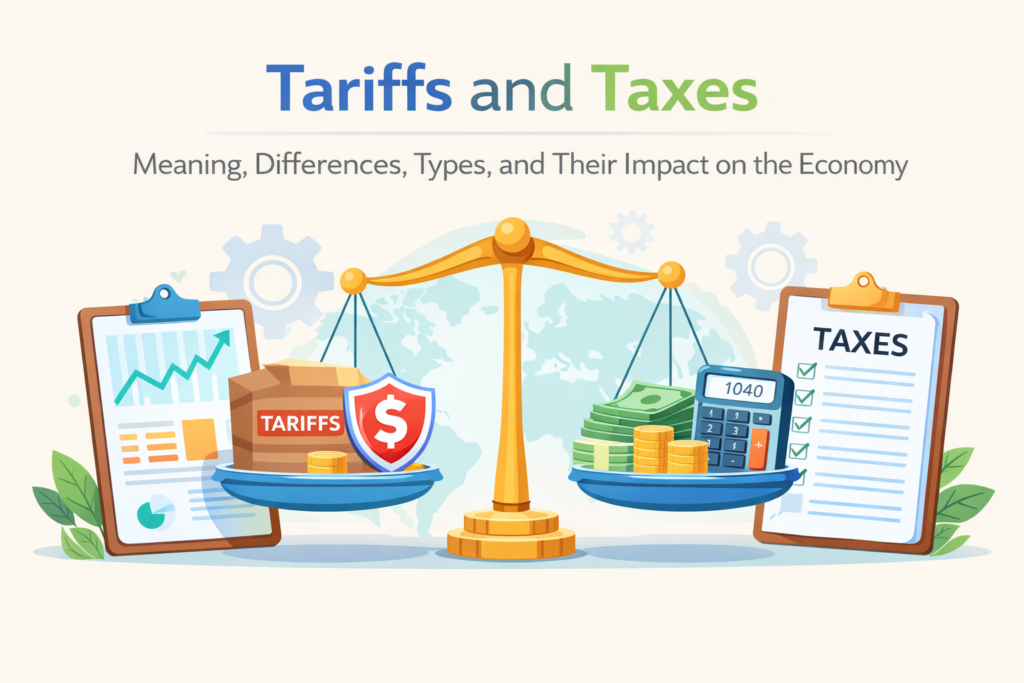
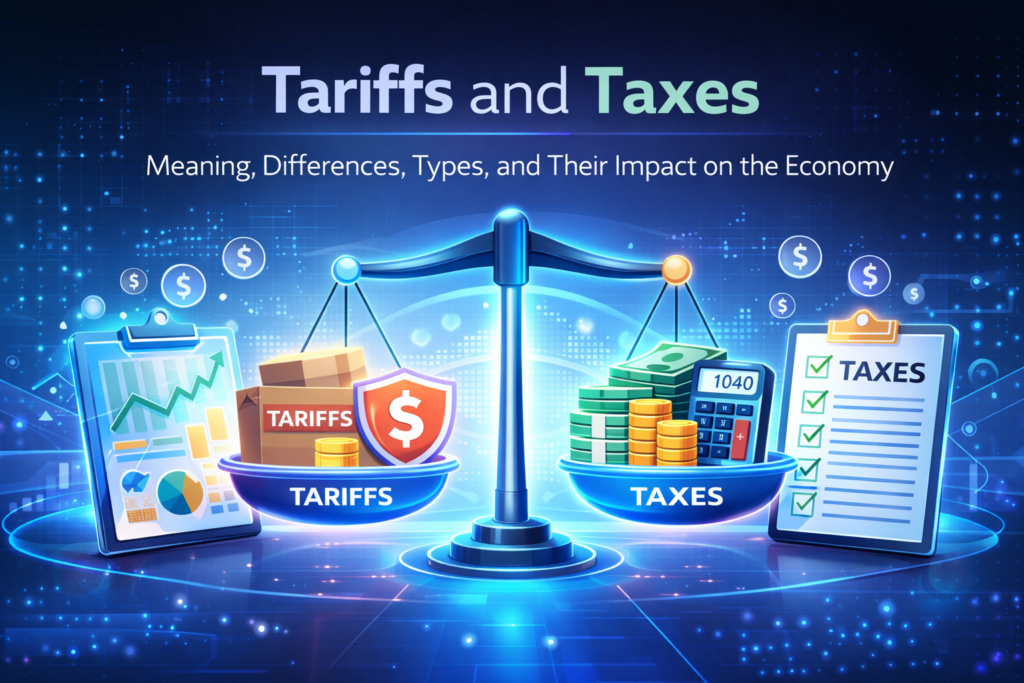
Tariffs and taxes are two of the most important tools used by governments to generate revenue and regulate economic activity. Although both involve collecting money from individuals or businesses, they serve different purposes and affect the economy in different ways. Tariffs are mainly associated with international trade, while taxes are applied within a country on income, goods, services, and property.
Understanding tariffs and taxes helps individuals, businesses, and consumers make better financial decisions. It also provides insight into how governments influence trade, control inflation, protect domestic industries, and fund public services. This article explains what tariffs and taxes are, how they work, their types, key differences, and their overall impact on the economy in a simple and easy-to-understand
What Are Tariffs?
A tariff is a tax imposed by a government on goods and services imported from other countries. Tariffs are mainly used in international trade and are paid when foreign products enter a country.
Tariffs increase the price of imported goods, making them more expensive compared to domestically produced products. This can influence consumer behavior and protect local industries from foreign competition.
Purpose of Tariffs
Governments use tariffs for several reasons:
- To protect domestic industries
- To generate government revenue
- To regulate imports and exports
- To reduce trade deficits
- To encourage local production
Tariffs are often part of a country’s trade policy.
Types of Tariffs
There are different types of tariffs, depending on how they are calculated and applied.
1️⃣ Ad Valorem Tariff
An ad valorem tariff is charged as a percentage of the value of the imported goods.
Example:
If a product worth $1,000 has a 10% tariff, the tariff amount is $100.
This type of tariff adjusts automatically with changes in product value.
2️⃣ Specific Tariff
A specific tariff is a fixed amount charged per unit of imported goods.
Example:
$5 per kilogram of imported goods, regardless of value.
Specific tariffs provide predictable revenue but do not adjust with price changes.
3️⃣ Compound Tariff
A compound tariff combines both ad valorem and specific tariffs.
This means a product is taxed with a fixed amount plus a percentage of its value.
4️⃣ Protective Tariff
Protective tariffs are designed to shield domestic industries from foreign competition by making imported goods more expensive.
5️⃣ Revenue Tariff
Revenue tariffs are imposed mainly to raise government income rather than protect local industries.
What Are Taxes?
A tax is a mandatory financial charge imposed by a government on individuals, businesses, or transactions within a country. Taxes are the primary source of government revenue and are used to fund public services such as healthcare, education, infrastructure, and defense.
Taxes apply to income, consumption, property, and business activities.
Purpose of Taxes
Taxes serve several important purposes:
- Funding public services
- Reducing income inequality
- Stabilizing the economy
- Controlling inflation
- Encouraging or discouraging certain behaviors
Taxes play a central role in national economic planning.
Types of Taxes
Taxes are broadly classified into direct taxes and indirect taxes.
Direct Taxes
Direct taxes are paid directly to the government by individuals or organizations.
Common Direct Taxes:
- Income tax
- Corporate tax
- Property tax
- Wealth tax
Direct taxes are usually based on income or asset ownership.
Indirect Taxes
Indirect taxes are collected on goods and services and paid indirectly by consumers.
Common Indirect Taxes:
- Sales tax
- Value Added Tax (VAT)
- Goods and Services Tax (GST)
- Excise duty
Indirect taxes are included in the price of goods and services.
Key Differences Between Tariffs and Taxes
Although tariffs are a type of tax, they differ from general taxation in many ways.
| Aspect | Tariffs | Taxes |
|---|---|---|
| Scope | International trade | Domestic economy |
| Applied On | Imported goods | Income, goods, services |
| Main Purpose | Trade regulation | Revenue & redistribution |
| Paid By | Importers | Individuals & businesses |
| Economic Impact | Affects trade | Affects entire economy |
Understanding these differences clarifies how each works.
How Tariffs Affect the Economy
Tariffs influence both domestic and international markets.
Positive Effects of Tariffs
- Protection of local industries
- Job creation in domestic sectors
- Reduced dependence on imports
Negative Effects of Tariffs
- Higher prices for consumers
- Reduced product choices
- Trade conflicts with other countries
Tariffs must be applied carefully to avoid negative consequences.
How Taxes Affect the Economy
Taxes impact almost every aspect of economic life.
Positive Effects of Taxes
- Funding public infrastructure
- Reducing income inequality
- Supporting economic development
Negative Effects of Taxes
- Reduced disposable income
- Lower business profitability
- Tax evasion risks if rates are too high
Balanced taxation is essential for economic stability.
Tariffs vs Taxes: Impact on Consumers
Both tariffs and taxes affect consumers directly or indirectly.
- Tariffs increase prices of imported goods
- Indirect taxes raise the cost of everyday items
- Direct taxes reduce take-home income
Consumers often bear the final burden of both tariffs and taxes.
Tariffs and Taxes in Global Trade
In global trade, tariffs play a strategic role.
- Used to negotiate trade agreements
- Applied during trade disputes
- Influence import and export flows
Many countries aim to reduce tariffs through international trade agreements.
Role of Government in Managing Tariffs and Taxes
Governments decide tariff and tax policies based on economic goals.
Government Objectives Include:
- Economic growth
- Employment generation
- Trade balance
- Social welfare
Policy changes are often influenced by global and domestic economic conditions.
Are Tariffs a Form of Tax?
Yes, tariffs are technically a form of tax, but they are limited to imports and exports. Unlike general taxes, tariffs mainly affect international trade rather than domestic income or consumption.
Advantages of Tariffs and Taxes
Advantages of Tariffs
- Protect domestic industries
- Generate trade-related revenue
Advantages of Taxes
- Fund government services
- Support social welfare programs
Both tools are essential for governance.
Disadvantages of Tariffs and Taxes
Disadvantages of Tariffs
- Higher consumer prices
- Trade retaliation
Disadvantages of Taxes
- Reduced disposable income
- Compliance burden
Effective policy design minimizes these drawbacks.
Tariffs and Taxes in Daily Life
Even if people don’t notice them directly, tariffs and taxes affect daily expenses.
- Imported electronics may cost more due to tariffs
- Income tax reduces monthly salary
- Indirect taxes affect grocery bills
Awareness helps individuals plan finances better.
Future of Tariffs and Taxes
The future of tariffs and taxes is evolving.
Key Trends
- Digital taxation
- Trade liberalization
- Environmental taxes
- Simplified tax systems
Governments continue to adapt policies to changing economic realities.
Frequently Asked Questions (FAQs)
Are tariffs paid by consumers or importers?
Importers pay tariffs, but costs are often passed to consumers.
Are taxes compulsory?
Yes, taxes are mandatory under law.
Do all countries impose tariffs?
Most countries impose tariffs, but rates vary.
Can tariffs increase inflation?
Yes, higher import costs can raise consumer prices.
Conclusion
Tariffs and taxes are essential tools used by governments to manage economies, regulate trade, and fund public services. While tariffs focus mainly on controlling international trade and protecting domestic industries, taxes play a broader role in revenue generation and economic redistribution.
Both tariffs and taxes have advantages and disadvantages, and their impact depends on how they are designed and implemented. Understanding these concepts helps individuals, businesses, and policymakers navigate economic decisions more effectively. A balanced approach ensures economic growth, consumer protection, and sustainable development.
Disclaimer
This article is for educational and informational purposes only. Tariff and tax laws vary by country and may change over time. Always refer to official government sources for accurate and updated information.