Introduction
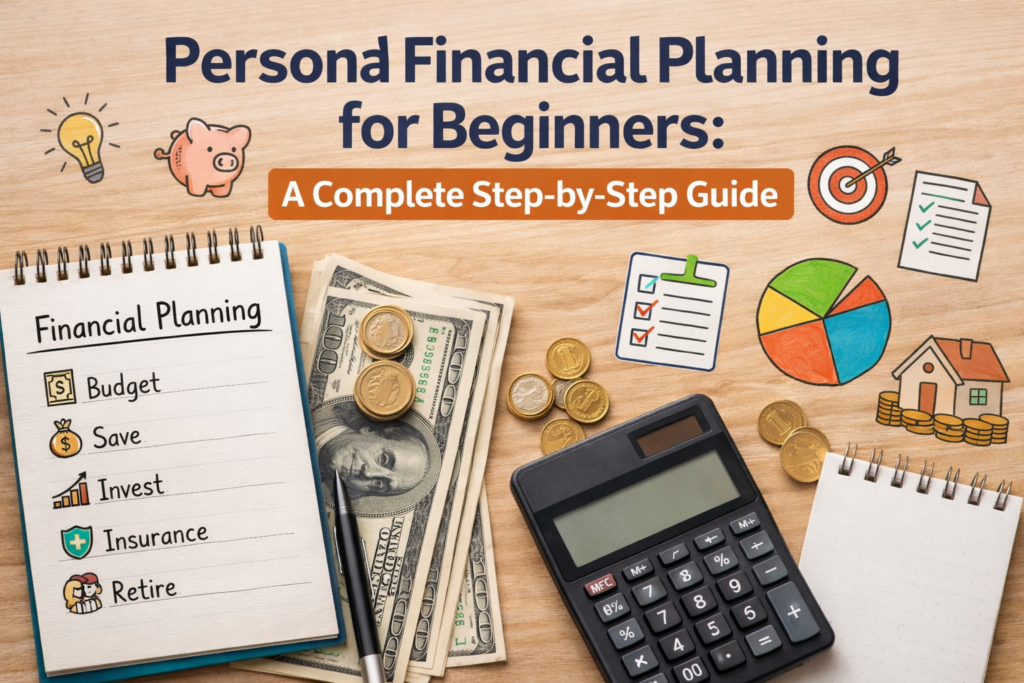
Personal financial planning is the foundation of a secure and stress-free life. Many people earn money regularly but still struggle with savings, emergencies, and long-term goals. This usually happens not because income is low, but because there is no proper financial plan in place. Personal financial planning helps you understand where your money goes, how to control expenses, and how to prepare for the future.
In simple terms, personal financial planning means managing your income, expenses, savings, investments, insurance, and taxes in a smart and organized way. Whether you are a student, salaried employee, freelancer, or business owner, having a clear financial plan can improve your quality of life and reduce financial stress.
This beginner-friendly guide explains personal financial planning step by step, using simple language and practical examples, making it easy for anyone to understand and apply.
What Is Personal Financial Planning?
Personal financial planning is the process of setting financial goals and creating a plan to achieve them using your available income and resources. It involves budgeting, saving, investing, managing debt, planning for emergencies, and preparing for long-term needs like retirement.
A good financial plan is not about getting rich quickly. It focuses on financial stability, discipline, and long-term security. Personal finance planning helps you make informed decisions and avoid common money mistakes.
Why Personal Financial Planning Is Important
Personal financial planning is important for several reasons:
- It helps you control your spending
- It builds a habit of saving regularly
- It prepares you for emergencies
- It reduces debt and financial stress
- It helps you achieve life goals such as buying a home or education
- It provides long-term financial security
Without proper planning, even high-income earners may face financial problems. With a plan, even a modest income can be managed efficiently.
Step 1: Understand Your Current Financial Situation
The first step in personal financial planning is knowing where you stand financially. This includes understanding your income, expenses, assets, and liabilities.
Calculate Your Monthly Income
Include all sources of income such as salary, freelance income, business income, or side earnings. Always calculate net income, which means income after taxes and deductions.
Track Your Expenses
List all your monthly expenses and divide them into:
- Fixed expenses (rent, EMIs, insurance)
- Variable expenses (food, travel, entertainment)
- Occasional expenses (shopping, festivals, travel)
Tracking expenses helps you identify unnecessary spending and areas where you can save money.
Step 2: Set Clear Financial Goals
Financial goals give direction to your money. Without goals, saving and planning become difficult.
Types of Financial Goals
- Short-term goals: Emergency fund, travel, gadgets
- Medium-term goals: Car purchase, higher education
- Long-term goals: Home purchase, retirement planning
Make sure your goals are specific, realistic, and time-based. For example, instead of saying “I want to save money,” say “I want to save ₹1,00,000 in one year.”
Step 3: Create a Monthly Budget
A budget is the backbone of personal financial planning. It tells your money where to go instead of wondering where it went.
Simple Budget Rule
A commonly used method is:
- 50% for needs
- 30% for wants
- 20% for savings
You can adjust this based on your income and lifestyle. The key is consistency and discipline.
Budgeting helps control expenses and ensures you save before spending.
Step 4: Build an Emergency Fund
An emergency fund is money set aside for unexpected situations like medical emergencies, job loss, or urgent repairs.
How Much Emergency Fund Is Enough?
Ideally, you should save:
- 3 to 6 months of living expenses
Keep this money in a savings account or liquid fund for easy access. An emergency fund prevents you from taking loans or using credit cards during emergencies.
Step 5: Manage and Reduce Debt
Debt management is an important part of personal finance planning. While some debts are necessary, unmanaged debt can harm your financial health.
Types of Debt
- Good debt: Education loan, home loan
- Bad debt: High-interest credit cards, personal loans for luxury expenses
Focus on clearing high-interest debts first. Avoid unnecessary borrowing and always check your repayment capacity before taking loans.
Step 6: Start Saving and Investing Early
Saving and investing are essential for long-term financial growth. Saving protects your money, while investing helps it grow over time.
Difference Between Saving and Investing
- Saving: Low risk, easy access, low returns
- Investing: Higher risk, long-term growth potential
As a beginner, start with simple and low-risk options and gradually learn more about investing.
Step 7: Protect Yourself with Insurance
Insurance is often ignored but plays a crucial role in financial planning.
Important Types of Insurance
- Health insurance
- Life insurance
- Accident insurance
Insurance protects you and your family from financial loss due to unexpected events. Always choose insurance based on your needs, not just tax benefits.
Step 8: Plan Your Taxes Wisely
Tax planning helps you save money legally by using available deductions and exemptions.
Good tax planning includes:
- Understanding your tax slab
- Using deductions responsibly
- Filing returns on time
Tax planning should be part of your overall financial plan, not a last-minute activity.
Step 9: Review and Update Your Financial Plan
Financial planning is not a one-time task. Your income, expenses, and goals change over time.
Review your plan:
- At least once a year
- After major life changes like marriage or job change
Regular reviews help keep your financial plan aligned with your goals.
Common Personal Finance Mistakes to Avoid
- Living beyond your means
- Not tracking expenses
- Ignoring emergency savings
- Overusing credit cards
- Delaying financial planning
Avoiding these mistakes can greatly improve your financial stability.
FAQs About Personal Financial Planning
Is financial planning only for high-income earners?
No, financial planning is important for everyone, regardless of income level.
How early should I start financial planning?
The earlier you start, the better. Even small steps make a big difference over time.
Do I need professional help for financial planning?
Beginners can start on their own. Professional help can be useful for complex situations.
Conclusion
Personal financial planning is a powerful tool that helps you take control of your money and future. By understanding your finances, setting clear goals, budgeting, saving, and planning ahead, you can build a secure financial life step by step. You do not need to be an expert or earn a high income to start. What matters most is discipline, awareness, and consistency.
Start today with small changes, and over time, you will see a positive impact on your financial confidence and stability.
Disclaimer
This article is for educational and informational purposes only. It does not provide financial, legal, or investment advice. Always evaluate your personal situation before making financial decisions.