A good credit score is one of the most valuable financial assets you can have. It affects your ability to get loans, credit cards, lower interest rates, and even better financial opportunities. One of the most effective tools for building a strong credit score is using credit cards responsibly.
Many people fear credit cards because of debt risks, but when used correctly, they can significantly improve your credit profile. This guide explains how credit cards impact your credit score, what habits you should follow, and how to avoid common mistakes while building a healthy credit history.
What Is a Credit Score?
A credit score is a numerical value that represents your creditworthiness. It shows lenders how reliable you are at repaying borrowed money.
Your credit score is calculated based on:
- Payment history
- Credit utilization
- Length of credit history
- Credit mix
- New credit inquiries
A higher score indicates lower risk for lenders.
Why Credit Cards Are Important for Building Credit
Credit cards are one of the easiest and fastest ways to build a credit score because they:
- Are easy to use regularly
- Report monthly activity to credit bureaus
- Show repayment behavior clearly
- Help establish long-term credit history
When used responsibly, even one credit card can help you build a strong credit profile.
How Credit Cards Affect Your Credit Score
1. Payment History (Most Important Factor)
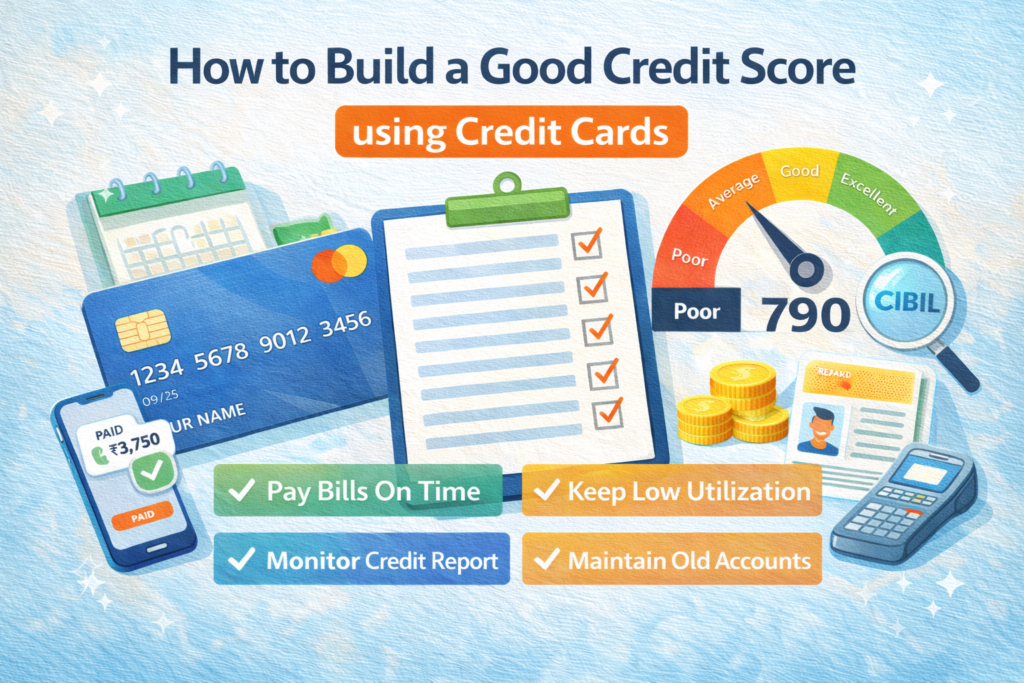
Paying your credit card bill on time is the biggest factor influencing your credit score.
What helps:
- Paying full amount before due date
- Never missing payments
What hurts:
- Late payments
- Skipped bills
Even one missed payment can lower your score significantly.
2. Credit Utilization Ratio
Credit utilization refers to how much of your credit limit you are using.
Example:
If your credit limit is ₹1,00,000 and you use ₹25,000, your utilization is 25%.
Best practice:
- Keep utilization below 30%
- Lower utilization improves your score
3. Length of Credit History
The longer you use credit responsibly, the better it is for your score.
Tips:
- Keep your oldest credit card active
- Avoid closing old cards unnecessarily
A longer credit history shows stability and trust.
4. Credit Mix
Using different types of credit improves your score slightly.
Credit cards help create a healthy mix alongside:
- Personal loans
- Home loans
- Education loans
Even a single card improves your credit mix.
5. New Credit Inquiries
Every time you apply for a new credit card, a hard inquiry is recorded.
Avoid:
- Applying for multiple cards at once
- Frequent credit applications
Too many inquiries can reduce your score temporarily.
Step-by-Step: How to Build a Good Credit Score Using Credit Cards
Step 1: Start With One Credit Card
Beginners should start with:
- One basic credit card
- Low credit limit
- Simple features
Secured credit cards are also good for beginners.
Step 2: Use the Card Regularly
Use your card for small, planned expenses like:
- Mobile recharges
- Utility bills
- Groceries
Regular usage shows active credit behavior.
Step 3: Always Pay Bills on Time
Timely payments are critical.
Best habit:
- Pay full bill before due date
- Enable auto-debit or reminders
Never rely on minimum due payments.
Step 4: Keep Credit Utilization Low
Avoid maxing out your card.
Ideal usage:
- Use less than 30% of credit limit
- Spread expenses across months
Low utilization signals financial discipline.
Step 5: Avoid Cash Withdrawals
Cash advances attract:
- High interest
- Extra fees
- Immediate interest charges
They do not help improve your credit score.
Step 6: Do Not Close Old Credit Cards
Older cards improve:
- Credit history length
- Score stability
Keep them active with small transactions.
Step 7: Monitor Your Credit Report
Check your credit report regularly to:
- Track progress
- Identify errors
- Detect fraud
Report inaccuracies immediately.
Common Mistakes That Hurt Credit Score
Paying Only Minimum Due
This increases interest and prolongs debt.
Missing Due Dates
Late payments negatively impact your score.
Using Full Credit Limit
High utilization reduces credit score.
Applying for Too Many Cards
Multiple inquiries lower your score.
Ignoring Credit Card Statements
Unnoticed errors can harm your profile.
How Long Does It Take to Build a Good Credit Score?
Building credit takes time and consistency.
- First improvement: 3–6 months
- Strong score: 12–24 months
- Excellent score: Long-term responsible usage
Patience and discipline are key.
Tips for Beginners to Build Credit Faster
- Use only one or two cards
- Pay bills in full every month
- Avoid impulse spending
- Track expenses regularly
- Set reminders for due dates
Simple habits lead to long-term benefits.
Can You Build Credit Without Debt?
Yes. You can build credit without carrying debt by:
- Paying full balance monthly
- Using interest-free period wisely
- Avoiding unnecessary purchases
Credit cards reward responsible behavior.
Myths About Credit Cards and Credit Score
Myth 1: Credit cards always cause debt
Truth: Debt occurs due to misuse, not the card itself.
Myth 2: Not using credit is good
Truth: No usage means no credit history.
Myth 3: Paying minimum due is safe
Truth: It increases interest and risk.
Benefits of a Good Credit Score
A good credit score helps you:
- Get loans easily
- Receive lower interest rates
- Qualify for better credit cards
- Enjoy higher credit limits
- Improve financial confidence
It saves money in the long run.
Who Should Be Careful With Credit Cards?
Credit cards may not be suitable if you:
- Have uncontrolled spending habits
- Ignore due dates
- Already have heavy debt
In such cases, build discipline first.
Conclusion
Credit cards are one of the most effective tools for building a good credit score—when used responsibly. By paying bills on time, keeping credit utilization low, and avoiding common mistakes, you can steadily improve your credit profile.
Building a good credit score is not about earning more money, but about managing credit wisely. With patience, discipline, and smart habits, credit cards can help you unlock better financial opportunities and long-term stability.
Disclaimer
This article is for educational purposes only and does not constitute financial advice. Credit policies may vary by institution.