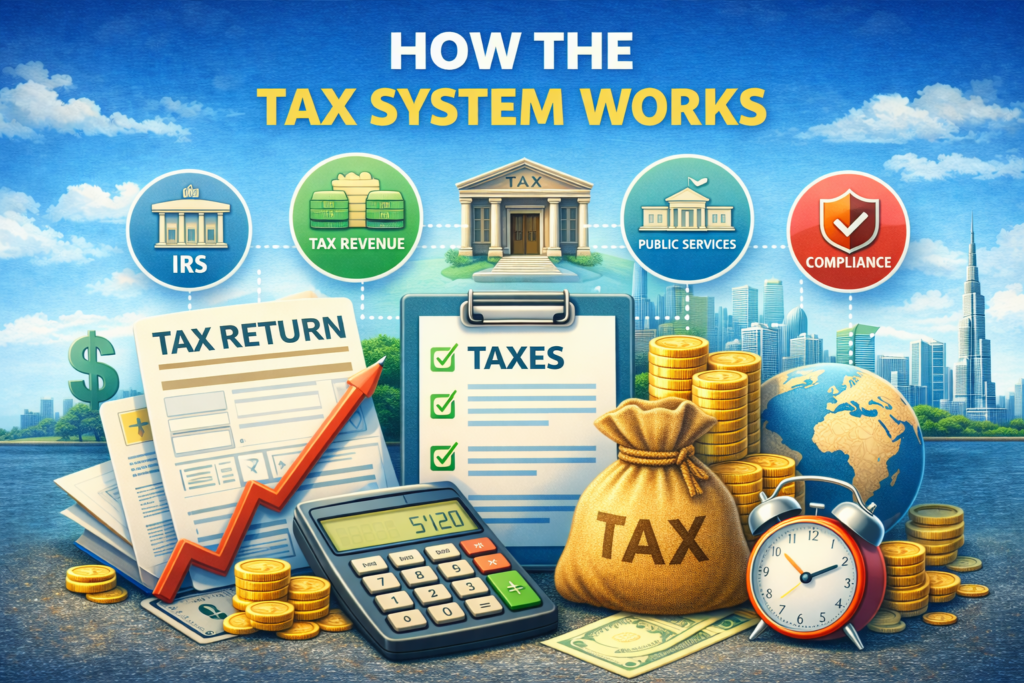
Taxes are an important part of every modern economy. Governments use taxes to fund public services such as healthcare, education, infrastructure, security, and social welfare programs. Although the word “tax” may sound complicated or confusing, the basic idea behind the tax system is simple: individuals and businesses contribute a portion of their income or spending to support the functioning of society. How The tax system works differently in each country, but the core principles remain similar worldwide. Understanding how the tax system works helps people become more informed citizens, manage their finances better, and avoid legal issues related to tax compliance.
This article explains how the tax system works in a clear and beginner-friendly way, covering types of taxes, tax collection, usage of tax revenue, and the role of taxpayers and governments.
What Is a Tax System?
A tax system is a structured method used by governments to collect money from individuals and businesses. This money, known as tax revenue, is used to finance government activities and public services.
The tax system includes:
- Tax laws and regulations
- Tax collection authorities
- Different types of taxes
- Procedures for filing and payment
A well-designed tax system aims to be fair, efficient, and transparent.
Why Governments Collect Taxes
Governments collect taxes to meet public needs and ensure economic stability.
Main Reasons for Tax Collection
- Funding public services (education, healthcare, transport)
- Building and maintaining infrastructure
- Supporting national defense and security
- Providing social welfare programs
- Managing economic growth and inflation
Without taxes, governments would struggle to provide essential services to citizens.
Types of Taxes Explained
Taxes are generally divided into different categories based on how they are collected and who pays them.
Direct Taxes
Direct taxes are paid directly to the government by individuals or organizations.
Income Tax
Income tax is charged on earnings such as salaries, wages, or business income. The tax rate may vary based on income level.
Key features:
- Paid directly by the individual
- Often progressive in nature
- Based on annual income
Corporate Tax
Corporate tax is paid by companies on their profits.
Key points:
- Applies to business profits
- Rates differ by country
- Helps regulate corporate contribution
Indirect Taxes
Indirect taxes are collected on goods and services and paid indirectly by consumers.
Sales Tax or Value Added Tax (VAT)
Sales tax or VAT is applied to the sale of goods and services.
Key features:
- Included in the price paid by consumers
- Collected by sellers and passed to the government
- Common worldwide
Excise Tax
Excise tax is applied to specific goods such as fuel, tobacco, or alcohol.
Purpose:
- Generate revenue
- Discourage harmful consumption
Customs Duty
Customs duty is charged on imported and exported goods.
Purpose:
- Protect domestic industries
- Regulate international trade
How Taxes Are Collected
Tax collection follows a structured process to ensure accuracy and compliance.
Tax Registration
Individuals and businesses must register with the tax authority to obtain a tax identification number.
Income Reporting
Taxpayers report their income through tax returns or declarations. This information helps authorities calculate tax liability.
Tax Assessment
Tax authorities assess the reported information and determine the amount of tax due.
Tax Payment
Taxes can be paid through:
- Bank transfers
- Online portals
- Authorized payment centers
Timely payment helps avoid penalties.
How Tax Rates Are Decided
Tax rates are set by governments based on economic goals, social policies, and revenue needs.
Progressive Tax System
Higher income earners pay a higher percentage of tax.
Flat Tax System
Everyone pays the same tax rate regardless of income.
Regressive Tax System
Lower income earners pay a higher proportion of their income in taxes.
Each system has advantages and limitations.
Role of Tax Authorities
Tax authorities manage the entire tax system.
Key Responsibilities
- Collecting taxes
- Enforcing tax laws
- Auditing tax returns
- Providing taxpayer assistance
They ensure fairness and transparency.
How Governments Use Tax Revenue
Tax revenue is used for public benefit.
Major Areas of Spending
- Education and schools
- Healthcare services
- Infrastructure projects
- Public safety and defense
- Social welfare programs
Tax spending supports economic development and social stability.
Tax Compliance and Penalties
Tax compliance means following tax laws and paying taxes on time.
Importance of Compliance
- Avoid legal penalties
- Support public services
- Maintain economic balance
Penalties may include fines, interest, or legal action for non-compliance.
Tax Benefits and Deductions
Some tax systems offer deductions and exemptions to reduce tax burden.
Common Examples
- Education expenses
- Healthcare costs
- Retirement contributions
These benefits encourage positive economic behavior.
Digitalization of Tax Systems
Modern tax systems increasingly use digital platforms.
Advantages of Digital Tax Systems
- Faster processing
- Reduced errors
- Increased transparency
- Convenient online filing
Digital tools improve efficiency for both taxpayers and authorities.
Challenges in Tax Systems
Despite improvements, tax systems face challenges.
Common Challenges
- Tax evasion
- Complex regulations
- Lack of awareness
- Administrative costs
Governments continuously update systems to address these issues.
Importance of Understanding the Tax System
Knowing how the tax system works helps individuals:
- Plan finances better
- Avoid penalties
- Make informed decisions
- Understand government policies
Financial awareness leads to responsible citizenship.
Frequently Asked Questions (FAQs)
Why do different countries have different tax systems?
Each country designs its tax system based on its economy, policies, and social needs.
Is paying tax mandatory?
Yes, paying applicable taxes is a legal obligation.
What happens if taxes are not paid?
Non-payment may lead to penalties or legal action.
Are all taxes paid annually?
No, some taxes are paid monthly, quarterly, or at the time of purchase.
Conclusion
The tax system is a vital part of how governments function and support society. By collecting money from individuals and businesses, governments fund essential services, manage economic growth, and promote social welfare. While tax systems may appear complex, understanding their basic structure makes them easier to navigate.
Learning how the tax system works empowers people to fulfill their responsibilities, plan finances wisely, and contribute to the development of their country.
Disclaimer
This article is for educational and informational purposes only. Tax laws and systems vary by country and may change over time. Always refer to official sources for current tax regulations.