Loans play an important role in modern personal and business finance. They help individuals meet major life goals such as buying a home, pursuing higher education, starting a business, or handling emergencies. A loan is essentially borrowed money that must be repaid over time, usually with interest, under agreed terms and conditions. There are many different types of loans available today, each designed for a specific purpose. Understanding the different types of loans helps borrowers choose the right option based on their needs, repayment ability, and financial situation. Using the wrong type of loan can increase financial stress, while the right loan can make goals more achievable.
This article explains the different types of loans, their purposes, features, and how they work, in a simple and beginner-friendly way.
What Is a Loan?
A loan is a financial arrangement where a lender provides money to a borrower with the expectation that it will be repaid within a specified period. Repayment usually includes the principal amount and an additional cost known as interest.
Key elements of a loan include:
- Loan amount
- Interest rate
- Repayment tenure
- Monthly installments (EMIs)
- Terms and conditions
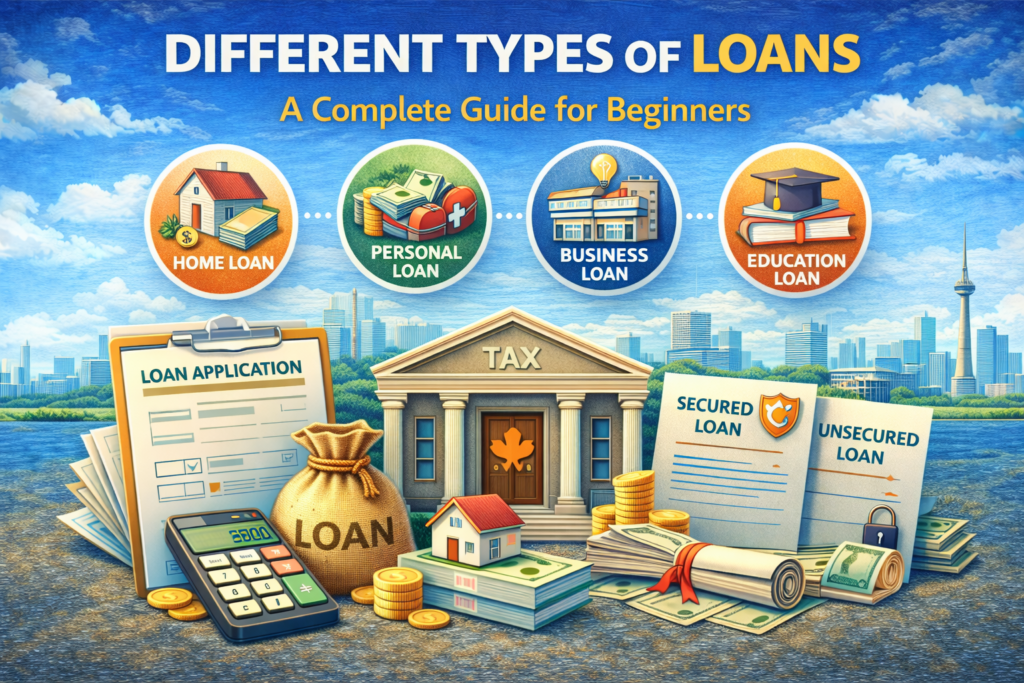
Loans can be broadly classified into secured and unsecured loans, and further divided based on their purpose. different types of loans
Secured Loans
Secured loans are loans that require the borrower to provide an asset as collateral. The collateral acts as security for the lender.
Features of Secured Loans
- Lower interest rates compared to unsecured loans
- Longer repayment periods
- Higher loan amounts
- Risk of asset loss if repayment fails
Home Loan
A home loan is taken to purchase, build, or renovate a residential property.
Common uses:
- Buying a house or apartment
- Constructing a home
- Home improvement or renovation
Home loans usually have long repayment tenures and relatively lower interest rates.
Car Loan
A car loan is used to purchase a new or used vehicle.
Key points:
- Vehicle acts as collateral
- Fixed repayment period
- Moderate interest rates
Car loans make vehicle ownership more affordable by spreading the cost over time.
Gold Loan
A gold loan is issued against gold jewelry or coins.
Advantages:
- Quick approval
- Lower interest compared to personal loans
- Flexible repayment options
Gold loans are often used for short-term financial needs.
Loan Against Property
This loan is taken by pledging residential or commercial property.
Common uses:
- Business expansion
- Medical emergencies
- Education expenses
It offers higher loan amounts due to property-based security.
Unsecured Loans
Unsecured loans do not require any collateral. Approval depends mainly on income, credit history, and repayment capacity.
Features of Unsecured Loans
- No asset required
- Faster processing
- Higher interest rates
- Shorter repayment periods
Personal Loan
A personal loan is one of the most flexible loan types.
Uses include:
- Medical expenses
- Travel
- Wedding costs
- Emergency needs
Personal loans are popular due to minimal documentation and quick disbursal.
Education Loan
An education loan helps students finance higher education.
Covers:
- Tuition fees
- Accommodation
- Books and study materials
Repayment usually starts after course completion, making it student-friendly.
Credit Card Loan
Credit card loans allow cardholders to convert spending or balances into installments.
Key points:
- Quick access
- Higher interest rates
- Best for short-term needs
Responsible usage is important to avoid high costs.
Payday Loan
A payday loan is a short-term loan meant to cover expenses until the next salary.
Characteristics:
- Small loan amount
- Very short repayment period
- Higher fees
These loans should be used cautiously.
Business Loans
Business loans are designed to support entrepreneurs and companies.
Term Loan
A term loan provides a fixed amount for business purposes.
Used for:
- Equipment purchase
- Business expansion
- Infrastructure development
Working Capital Loan
This loan supports day-to-day business operations.
Covers:
- Inventory
- Salaries
- Utility bills
It helps maintain smooth cash flow.
Startup Loan
Startup loans support new businesses in their early stages.
Features:
- Designed for entrepreneurs
- May include flexible terms
- Often supported by government programs
Government-Backed Loans
Some loans are supported or subsidized by governments.
Features
- Lower interest rates
- Special eligibility criteria
- Aimed at social or economic development
Examples include education loans, agricultural loans, and small business support loans.
Short-Term vs Long-Term Loans
Short-Term Loans
- Short repayment period
- Higher monthly payments
- Used for immediate needs
Long-Term Loans
- Longer tenure
- Lower monthly installments
- Used for large expenses
Choosing the right tenure depends on income stability and financial goals.
Fixed Rate vs Floating Rate Loans
Fixed Rate Loans
- Interest rate remains constant
- Predictable monthly payments
Floating Rate Loans
- Interest rate changes with market conditions
- Payments may increase or decrease
Both have advantages depending on economic conditions.
How to Choose the Right Loan
Before taking any loan, consider:
- Purpose of the loan
- Interest rate and total cost
- Repayment capacity
- Loan tenure
- Terms and conditions
Comparing options helps avoid unnecessary financial burden.
Risks of Taking Loans
While loans are useful, they also carry risks.
Common risks include:
- Over-borrowing
- Missed payments
- Increased debt burden
- Impact on credit score
Responsible borrowing is essential.
Importance of Understanding Loan Types
Knowing different loan types helps borrowers:
- Select suitable products
- Manage finances effectively
- Avoid high interest costs
- Plan repayments wisely
Financial awareness reduces long-term stress.
Frequently Asked Questions (FAQs)
Which loan has the lowest interest rate?
Secured loans usually have lower interest rates.
Can I take multiple loans at the same time?
Yes, but repayment capacity is important.
Is a credit score required for all loans?
Most lenders consider credit history for approval.
Are loans taxable?
Loan amounts are not income, but tax rules may vary.
Conclusion
There are many different types of loans available today, each designed to meet specific financial needs. From home loans and education loans to personal and business loans, understanding their features helps borrowers make better decisions. Loans can be powerful financial tools when used responsibly, but they require careful planning and disciplined repayment.
By choosing the right loan type and managing repayments wisely, individuals and businesses can achieve their goals without unnecessary financial strain.
Disclaimer
This article is for informational and educational purposes only. Loan terms, eligibility, and interest rates vary by lender and region. Always review official lender information before applying.