Credit and Debit Cards
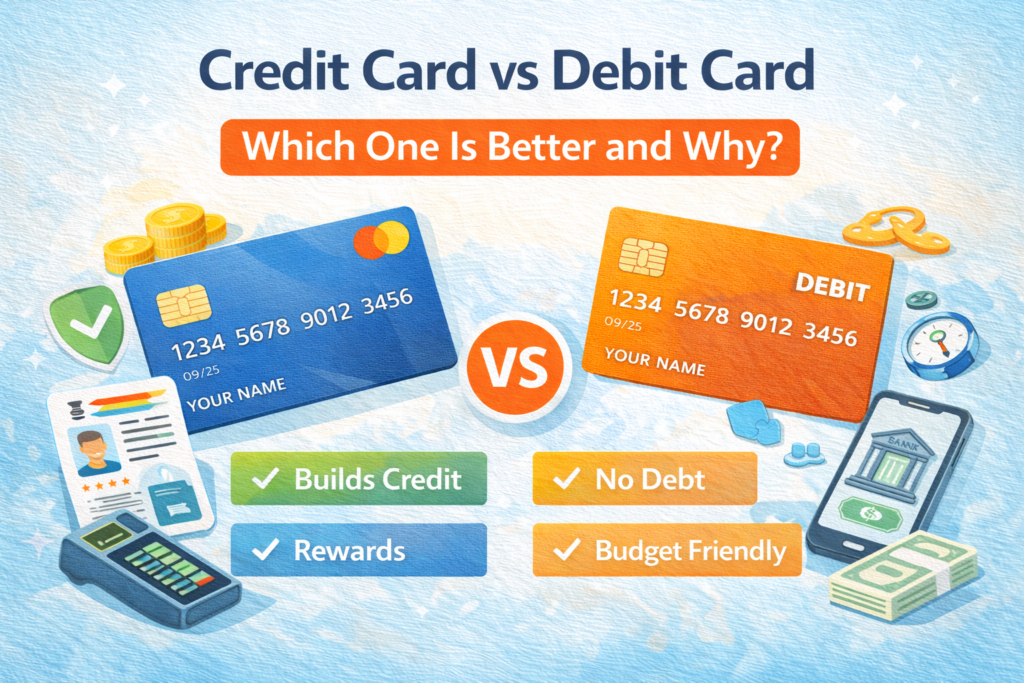
In today’s digital economy, both credit cards and debit cards have become essential financial tools. From paying utility bills and shopping online to booking travel tickets, these cards offer speed and convenience. However, many people are unsure which one is better and when to use each card. Credit vs Debit Card
This article explains the difference between credit cards and debit cards, their advantages, disadvantages, and which option is better depending on your financial needs. By the end, you will clearly understand how to choose the right card and use it responsibly.
What Is a Credit Card?
A credit card allows you to borrow money from a bank or financial institution up to a pre-approved limit. You can use this borrowed money for purchases or payments and repay it later.
If you pay the full amount before the due date, you usually avoid interest. However, unpaid balances attract interest charges. Credit vs Debit Card
Key Features of a Credit Card
- Fixed credit limit
- Monthly billing cycle
- Interest-free period
- Interest charged on unpaid balance
- Helps build credit history
What Is a Debit Card?
A debit card is directly linked to your bank account. When you make a payment, the amount is instantly deducted from your account balance. Credit vs Debit Card
Debit cards do not involve borrowing money, which makes them safer for daily spending and budgeting.
Key Features of a Debit Card
- Linked to savings or current account
- No borrowing involved
- No interest charges
- Requires sufficient balance
- Simple and easy to use
Major Differences Between Credit Card and Debit Card
Source of Money
- Credit Card: Borrowed money from the bank
- Debit Card: Your own money from your bank account
Interest Charges
- Credit Card: Interest applies if bill is unpaid
- Debit Card: No interest involved
Impact on Credit Score
- Credit Card: Affects credit score positively or negatively
- Debit Card: No impact on credit score
Spending Control
- Credit Card: Risk of overspending
- Debit Card: Better spending control
Credit Card vs Debit Card: Comparison Table
| Feature | Credit Card | Debit Card |
|---|---|---|
| Money Used | Borrowed | Own money |
| Interest | Yes (if unpaid) | No |
| Credit Score | Affects score | No impact |
| Rewards | Cashback, points | Limited |
| Overspending Risk | High | Low |
| Emergency Use | Very useful | Limited |
| Fees | Possible | Minimal |
Advantages of Credit Cards
1. Builds Credit History
Regular and timely payments help improve your credit score, making future loans easier.
2. Interest-Free Period
You can use money now and pay later without interest if paid on time.
3. Rewards and Cashback
Many cards offer rewards, cashback, or travel benefits.
4. Emergency Financial Support
Helpful in emergencies when cash is unavailable.
5. Purchase Protection
Some cards offer fraud protection and insurance benefits.
Disadvantages of Credit Cards
High Interest Rates
Unpaid balances attract high interest.
Risk of Debt
Overspending can lead to financial stress.
Fees and Penalties
Late payments and cash withdrawals carry charges.
Requires Discipline
Misuse can damage your credit score.
Advantages of Debit Cards
1. No Debt Risk
You spend only what you have.
2. Easy Budget Management
Helps control daily expenses.
3. No Interest or Late Fees
No borrowing means no interest.
4. Widely Accepted
Accepted at most online and offline locations.
5. Simple to Use
Ideal for beginners and daily expenses.
Disadvantages of Debit Cards
Limited Fraud Protection
Refunds may take longer compared to credit cards.
No Credit Score Benefit
Does not help build credit history.
Limited Rewards
Few debit cards offer meaningful rewards.
Balance Dependency
Transactions fail if account balance is low.
Which Card Is Better for Online Shopping?
Credit cards are generally better for online shopping due to:
- Better fraud protection
- Easy chargeback options
- Reward benefits
Debit cards are safe too but offer fewer protections.
Which Card Is Better for Beginners?
For beginners:
- Debit card is safer for daily use
- Credit card is useful if spending is disciplined
Starting with one credit card and a debit card is often ideal.
Which Card Is Better for Financial Discipline?
Debit cards encourage discipline because:
- No borrowing
- Real-time balance tracking
- Reduced impulse spending
Credit cards require careful planning.
Which Card Is Better for Travel?
Credit cards are better for travel due to:
- International acceptance
- Travel insurance
- Hotel and flight rewards
Debit cards may face usage limits abroad.
When Should You Use a Credit Card?
- Large purchases with repayment plan
- Emergency expenses
- Online shopping
- Travel bookings
- Building credit history
When Should You Use a Debit Card?
- Daily expenses
- Grocery shopping
- ATM withdrawals
- Budget-controlled spending
- Small purchases
Common Myths About Credit and Debit Cards
Myth 1: Credit cards are bad
Truth: They are useful when used responsibly.
Myth 2: Debit cards are always safer
Truth: Credit cards offer better fraud protection.
Myth 3: More cards mean better credit score
Truth: Responsible usage matters, not number of cards.
Tips to Use Both Cards Smartly
Use Debit Card For
- Routine expenses
- Budgeted spending
Use Credit Card For
- Planned purchases
- Rewards and cashback
- Credit score building
Always track spending and pay credit card bills on time.
Final Verdict: Which One Is Better?
There is no single winner between credit cards and debit cards.
- Debit cards are better for controlling spending and avoiding debt
- Credit cards are better for rewards, emergencies, and credit building
The best approach is to use both wisely according to your financial situation. Credit vs Debit Card
Conclusion
Credit cards and debit cards serve different purposes. Understanding their differences helps you choose the right card at the right time. Debit cards promote safe spending, while credit cards offer flexibility and financial growth opportunities when managed responsibly. Credit vs Debit Card
By using both cards correctly, you can enjoy convenience, security, and long-term financial benefits.
Disclaimer
This article is for informational purposes only and does not provide financial advice. Always read your bank’s terms and conditions before using any card.