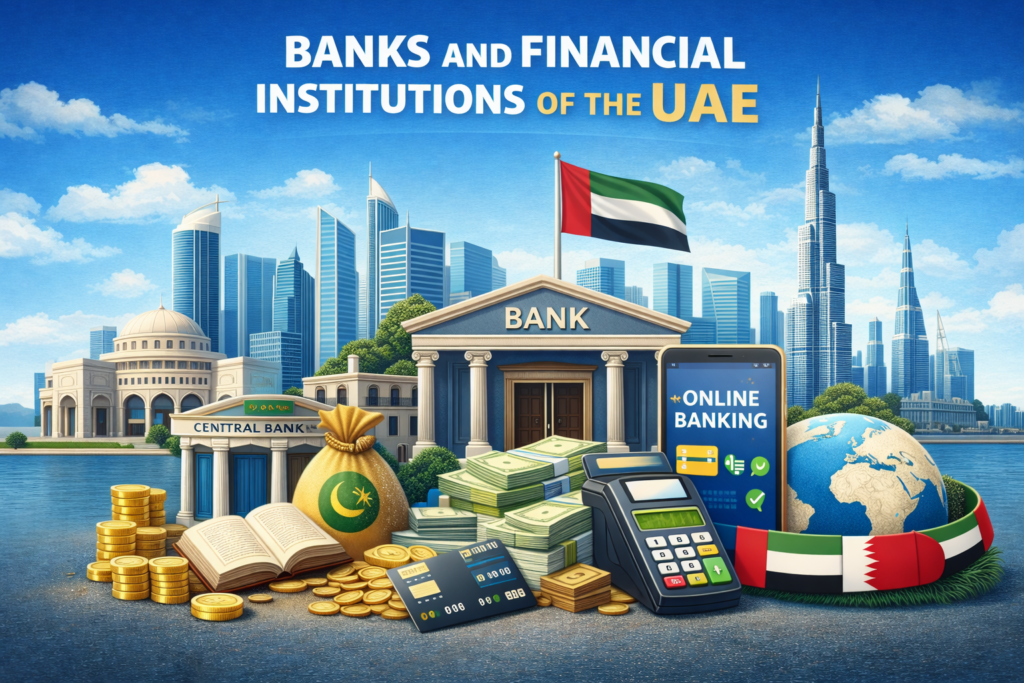
The United Arab Emirates (UAE) has one of the most advanced and well-regulated banking and financial systems in the Middle East. banks and financial institutions of UAE over the years, the UAE has transformed itself into a global financial hub, attracting investors, businesses, and professionals from around the world. The country’s banking sector plays a vital role in economic development by supporting trade, investment, infrastructure, and personal financial needs.
Banks and financial institutions in the UAE offer a wide range of services, including retail banking, corporate banking, Islamic banking, investment services, and digital financial solutions. Strong regulation, modern infrastructure, and government support have made the UAE’s financial system stable and trustworthy.
This article explains the structure, types, and roles of banks and financial institutions in the UAE in a simple and easy-to-understand way.
Overview of the UAE Banking System
The UAE banking system operates under a well-defined regulatory framework that ensures financial stability and consumer protection. The system consists of:
- Central banking authority
- Commercial banks
- Islamic banks
- Investment and development institutions
- Non-bank financial institutions
Together, these institutions support economic growth and financial inclusion across the country.
Role of the Central Bank of the UAE
The Central banks and financial institutions of UAE is the main regulatory authority responsible for supervising banks and financial institutions.
Key Functions
- Issuing national currency
- Regulating banks and financial institutions
- Maintaining monetary and financial stability
- Ensuring compliance with banking laws
- Managing payment systems
The Central Bank ensures that all financial institutions follow strict rules related to capital, liquidity, and risk management.
Commercial Banks in the UAE
Commercial banks form the backbone of the UAE’s banking sector. They provide essential services to individuals, businesses, and government entities.
Services Offered
- Savings and current accounts
- Personal and business loans
- Credit cards
- Trade finance
- Foreign exchange services
Commercial banks in the UAE include both local and international institutions, offering a competitive and customer-focused environment. banks and financial institutions of UAE
Islamic Banks in the UAE
Islamic banking is a major component of the UAE financial system. These banks operate according to Islamic principles, which prohibit interest and promote ethical, asset-backed financing.
Key Features of Islamic Banks
- Profit-sharing instead of interest
- Asset-backed transactions
- Ethical investment principles
Islamic banks offer products such as Murabaha, Ijara, and Sukuk, making them popular among customers seeking Sharia-compliant financial services. banks and financial institutions of UAE
Investment Banks and Financial Institutions
Investment banks and specialized financial institutions support large-scale projects, capital markets, and economic diversification.
Key Functions
- Corporate financing
- Asset and wealth management
- Capital market services
- Advisory services
These institutions play an important role in attracting foreign investment and supporting infrastructure development.
Non-Bank Financial Institutions (NBFIs)
Non-bank financial institutions provide financial services without holding traditional banking licenses.
Examples of NBFIs
- Finance companies
- Insurance companies
- Exchange houses
- Investment firms
They complement banks by offering specialized financial services such as leasing, insurance, and remittance solutions. banks and financial institutions of UAE
Digital Banking and Fintech in the UAE
The UAE is a regional leader in digital banking and financial technology. Many banks offer advanced digital services to improve customer experience.
Popular Digital Services
- Mobile banking apps
- Online account opening
- Digital wallets
- Contactless payments
Government initiatives strongly support fintech innovation, making the UAE a hub for modern financial solutions.
Regulatory Framework and Compliance
The UAE banking sector operates under strict regulations to maintain transparency and trust.
Key Regulatory Areas
- Anti-money laundering (AML)
- Know Your Customer (KYC)
- Consumer protection
- Cybersecurity standards
These regulations help protect customers and ensure international credibility.
Importance of Banks and Financial Institutions in the UAE
Banks and financial institutions contribute significantly to the UAE economy by:
- Supporting business growth
- Facilitating international trade
- Financing infrastructure projects
- Promoting financial inclusion
They also play a crucial role in economic diversification beyond oil and gas.
Challenges Facing the UAE Banking Sector
Despite its strength, the UAE banking sector faces challenges such as:
- Global economic uncertainty
- Cybersecurity risks
- Competition from fintech companies
- Regulatory compliance costs
Banks are addressing these challenges through innovation, technology, and strong governance.
Future of Banking and Finance in the UAE
The future of banks and financial institutions in the UAE is expected to focus on:
- Digital transformation
- Sustainable and green finance
- Expansion of Islamic finance
- Enhanced customer experience
With continuous reforms and innovation, the UAE’s financial sector is expected to remain strong and competitive globally.
FAQs About Banks and Financial Institutions in the UAE
Is the UAE banking system safe?
Yes, the UAE banking system is well-regulated and known for financial stability.
Are Islamic banks popular in the GCC?
Yes, Islamic banking is widely used and strongly supported.
Can foreigners open bank accounts in the UAE?
Yes, residents and non-residents can open accounts, subject to bank policies.
Conclusion
Banks and financial institutions of the UAE form a strong and reliable financial ecosystem that supports individuals, businesses, and the national economy. With a balanced mix of conventional and Islamic banking, modern digital services, and strict regulatory oversight, the UAE has established itself as a leading financial hub in the region. Understanding the structure and role of these institutions helps individuals and businesses navigate the UAE’s financial landscape with confidence.
Disclaimer
This article is for informational and educational purposes only. Banking rules and financial services may vary by institution and are subject to change. Always consult official sources for the latest information.