
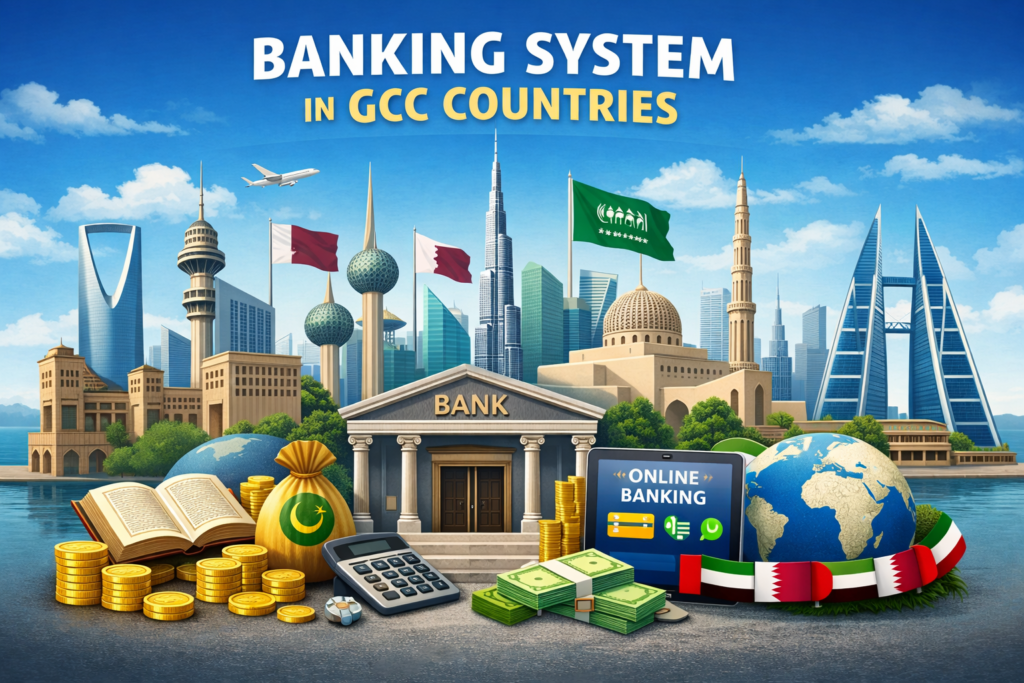
The banking system in GCC countries plays a vital role in the economic stability and growth of the Gulf region. The Gulf Cooperation Council (GCC) includes six countries: Saudi Arabia, United Arab Emirates (UAE), Qatar, Kuwait, Oman, and Bahrain. These nations are known for strong financial reserves, oil-based economies, and rapidly growing banking and financial sectors.
Over the years, GCC banking systems have evolved from traditional banking models into modern, technology-driven financial ecosystems. Today, banks in the GCC region offer a wide range of services including retail banking, corporate banking, Islamic banking, digital banking, and international financial services.
This article explains how the banking system in GCC countries works, its structure, types of banks, regulatory framework, key features, and the role it plays in regional and global finance.
What Is the GCC Banking System?
The GCC banking system refers to the network of financial institutions operating within the six GCC member states under their respective central banks and regulatory authorities. These banks manage deposits, provide loans, support businesses, facilitate trade, and ensure financial stability.
Each GCC country has its own central bank or monetary authority that regulates banking operations, but all follow similar principles focused on financial security, transparency, and economic growth.
Structure of the Banking System in GCC Countries
The banking system in GCC countries is generally divided into the following components:
Central Banks
Each GCC country has a central bank responsible for:
- Issuing currency
- Regulating commercial banks
- Managing monetary policy
- Maintaining financial stability
Examples include:
- Saudi Central Bank
- Central Bank of the UAE
- Qatar Central Bank
- Central Bank of Kuwait
Central banks ensure that banks follow rules related to capital requirements, liquidity, and risk management.
Commercial Banks
Commercial banks are the backbone of the GCC banking system. They offer services such as:
- Savings and current accounts
- Personal and business loans
- Credit cards
- Remittance services
These banks serve individuals, businesses, and government institutions.
Islamic Banks
Islamic banking is a major feature of the GCC financial system. Islamic banks operate according to Sharia principles, which prohibit interest (riba) and promote profit-sharing.
Common Islamic banking products include:
- Murabaha (cost-plus financing)
- Ijara (leasing)
- Mudarabah (profit-sharing)
- Sukuk (Islamic bonds)
Many GCC countries are global leaders in Islamic finance.
Investment and Development Banks
These banks focus on:
- Corporate financing
- Infrastructure projects
- Asset management
- Capital market services
They support economic diversification beyond oil and gas.
Key Features of the GCC Banking System
Strong Regulation and Stability
GCC banking systems are known for strong regulatory oversight. Central banks enforce strict compliance standards to maintain financial stability and protect customers.
High Capital Adequacy
Banks in the GCC generally maintain high capital reserves, making them resilient to economic shocks.
Liquidity Support
Due to government backing and strong reserves, GCC banks usually have strong liquidity positions.
Government Ownership and Support
Many major banks have partial or full government ownership, increasing trust and stability in the system.
Role of Islamic Banking in GCC Countries
Islamic banking is deeply integrated into the GCC financial system. In some GCC countries, Islamic banks hold a significant share of total banking assets.
Reasons for strong Islamic banking growth:
- Cultural and religious acceptance
- Ethical and risk-sharing principles
- Government support and regulation
Islamic banks operate alongside conventional banks, giving customers more financial choices.
Digital Banking and Financial Technology in GCC
The GCC banking sector is rapidly adopting digital transformation. Many banks now offer:
- Online account opening
- Mobile banking apps
- Digital wallets
- Contactless payments
Governments in the GCC actively promote fintech innovation to improve financial inclusion and efficiency.
Banking Services Offered in GCC Countries
Common banking services include:
- Retail banking for individuals
- Corporate banking for businesses
- Trade finance
- Foreign exchange services
- Wealth management
Banks also support international trade and cross-border transactions due to the GCC’s strategic global location.
Banking Regulations and Compliance
Each GCC country has its own banking laws, but regulations generally focus on:
- Anti-money laundering (AML)
- Know Your Customer (KYC) compliance
- Consumer protection
- Financial transparency
These regulations help maintain trust and international credibility.
Challenges Facing the GCC Banking System
Despite its strength, the GCC banking system faces certain challenges:
- Economic dependence on oil revenues
- Global interest rate changes
- Cybersecurity risks
- Competition from fintech companies
Banks are addressing these challenges through diversification, technology investment, and stronger risk management.
Importance of the GCC Banking System to the Economy
The banking system supports:
- Economic growth
- Infrastructure development
- Business expansion
- Employment generation
It also plays a key role in attracting foreign investment to the region.
Future of Banking in GCC Countries
The future of GCC banking is expected to focus on:
- Digital-first banking models
- Sustainable and green finance
- Expansion of Islamic finance
- Greater financial inclusion
With ongoing reforms and innovation, the GCC banking sector is expected to remain strong and competitive.
FAQs About Banking System in GCC
Is the GCC banking system stable?
Yes, GCC banks are generally well-regulated and financially stable.
Are Islamic banks available in all GCC countries?
Yes, all GCC countries have Islamic banking institutions.
Is digital banking popular in the GCC?
Yes, digital banking adoption is growing rapidly across the region.
Conclusion
The banking system in GCC countries is one of the strongest and most well-regulated financial systems in the world. With a balanced mix of conventional and Islamic banking, strong government support, and rapid digital innovation, GCC banks continue to play a crucial role in regional and global finance. Understanding how this system works helps individuals and businesses make informed financial decisions and appreciate the economic strength of the Gulf region.
Disclaimer
This article is for informational and educational purposes only. It does not provide financial or legal advice. Banking rules and services may vary by country and institution.