
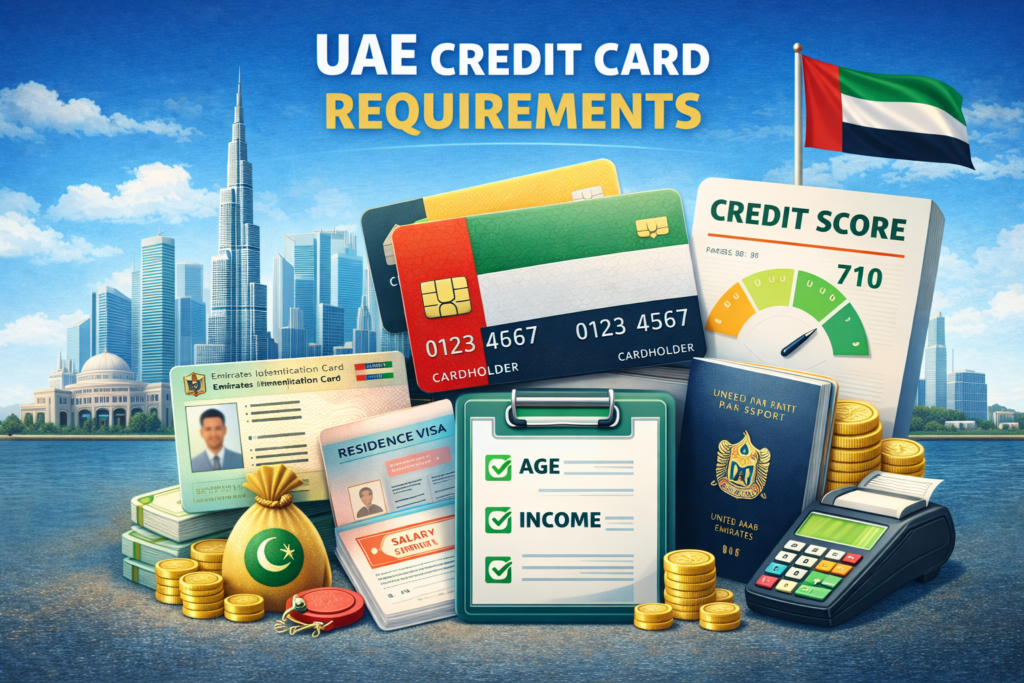
Credit cards have become an essential part of personal finance in the United Arab Emirates (UAE). With a strong banking system, modern payment infrastructure, and a large expatriate population, credit cards are widely used for shopping, travel, online payments, and bill settlements. However, before applying for a credit card, it is important to understand UAE credit card requirements the eligibility rules and requirements set by UAE banks.
The UAE follows a regulated and structured approach to issuing credit cards. Banks focus on income stability, employment status, residency, and credit history to ensure responsible lending. While requirements may vary slightly from one bank to another, most financial institutions follow similar guidelines.
This article explains UAE credit card requirements in a simple and detailed way, covering eligibility criteria, documents needed, employment conditions, credit score importance, and tips for approval.
Overview of Credit Cards in the UAE
A credit card allows individuals to make purchases and pay later within a fixed billing cycle. UAE banks issue credit cards to residents who meet specific income and documentation standards. These cards may offer benefits such as reward points, cashback, travel perks, and installment payment options.
Banks in the UAE issue both conventional and Islamic credit cards. Islamic credit cards operate under Sharia principles and do not charge interest, instead using profit-based structures.
Minimum Age Requirement
Age is one of the basic eligibility criteria for credit cards in the UAE.
General Age Rules
- Minimum age for primary credit card holder: 21 years
- Supplementary cards may be issued to family members aged 18 years or above, depending on bank policy
Banks consider age as an indicator of financial responsibility and legal eligibility to enter into a credit agreement.
Residency and Legal Status
To apply for a credit card in the UAE, the applicant must be a legal resident.
Residency Requirements
- Valid Emirates ID
- Valid UAE residence visa (for expatriates)
- UAE nationals must present a valid Emirates ID
Tourists and short-term visitors are generally not eligible for unsecured credit cards. Residency ensures that banks can verify identity and maintain regulatory compliance.
Minimum Salary and Income Requirements
Income is one of the most UAE credit card requirements important factors in determining credit card eligibility in the UAE.
Typical Minimum Salary
- Entry-level or basic credit cards: AED 5,000 per month
- Mid-range credit cards: AED 8,000 – AED 15,000 per month
- Premium or lifestyle credit cards: AED 15,000+ per month
Salary thresholds vary depending on the bank and the type of credit card. Higher income generally results in higher credit limits and better benefits.
Employment Status and Stability
Banks prefer applicants with stable employment or consistent income sources.
Salaried Employees
Salaried individuals usually need:
- Employment with a UAE-registered company
- Minimum job tenure (often 3 to 6 months)
- Salary credited to a UAE bank account
Applicants working with well-known or approved companies may receive faster approvals.
Self-Employed and Business Owners
Self-employed individuals and business owners can also apply, but requirements are more detailed.
Banks may require:
- Valid trade license
- Proof of business ownership
- Business bank statements
- Financial records showing stable income
Income consistency is more important than business size.
Credit Score and Credit History
UAE banks check the applicant’s credit history through the Al Etihad Credit Bureau (AECB).
Why Credit Score Matters
- Shows past repayment behavior
- Helps banks assess financial risk
- Influences approval and credit limit
General Credit Score Expectations
- Score above 650: Higher chance of approval
- Score between 600–650: Approval possible with conditions
- Low score: May result in rejection or limited options
Maintaining timely payments on loans and existing cards improves credit score over time.
Documents Required for UAE Credit Card Application
Documentation helps banks verify identity, income, and residency.
Identity Documents
- Emirates ID (original and copy)
- Passport copy
- Residence visa copy (for expatriates)
Income Proof
- Salary certificate issued by employer
- Last 3–6 months bank statements showing salary credits
Employment Proof
- Employment contract or offer letter (if required)
- Company details or HR contact information
Address Proof (If Requested)
- Tenancy contract (Ejari)
- Utility bill
Additional Documents (Case-Specific)
- Trade license (self-employed)
- Security cheque (some banks)
- Existing credit card details
Secured vs Unsecured Credit Cards
Not all credit cards require the same level of eligibility.
Unsecured Credit Cards
- Issued without collateral
- Require stable income and good credit score
- Most commonly used type in the UAE
Secured Credit Cards
- Issued against a fixed deposit
- Suitable for low-income or first-time applicants
- Lower risk for banks
Secured cards help individuals build or improve credit history.
Islamic Credit Card Requirements
Islamic credit cards follow similar eligibility rules but operate under Sharia-compliant structures.
Key Features
- No interest charges
- Profit-based or fee-based model
- Ethical and asset-backed transactions
Eligibility criteria such as income, age, and residency remain largely the same.
Credit Limit Determination
Credit limit is decided based on:
- Monthly income
- Existing liabilities
- Credit score
- Employment stability
Typically, banks offer a credit limit of 2 to 3 times the monthly salary, subject to internal policies.
Reasons Why Credit Card Applications Get Rejected
Understanding common rejection reasons can help applicants prepare better.
Common Causes
- Low or irregular income
- Poor credit score
- High existing debt
- Incomplete documentation
- Frequent credit card applications
Banks aim to ensure responsible lending and risk control.
Tips to Improve Credit Card Approval Chances
Here are practical and safe tips:
- Maintain stable employment
- Ensure salary is credited regularly
- Keep credit utilization low
- Avoid missed payments
- Apply only for suitable cards
- Submit accurate documents
Responsible financial behavior improves long-term eligibility.
FAQs About UAE Credit Card Requirements
Can expatriates apply for credit cards in the UAE?
Yes, expatriates with valid residency and income can apply.
Is a credit score mandatory?
Yes, banks use credit scores to assess eligibility.
Can unemployed individuals get a credit card?
Generally no, unless applying for a secured credit card.
Do UAE banks charge annual fees?
Some cards have annual fees, while others may offer fee waivers.
Conclusion
Understanding UAE credit card requirements helps applicants make informed decisions and improves approval chances. Banks in the UAE follow structured eligibility criteria focused on income stability, residency, credit history, and documentation. While requirements may vary slightly between institutions, the core principles remain consistent across the banking sector.
By meeting eligibility conditions, maintaining a good credit record, and choosing the right card, individuals can benefit from the convenience and flexibility that credit cards offer in the UAE.
Disclaimer
This article is for informational and educational purposes only. Credit card policies, eligibility criteria, and documentation requirements may vary by bank and are subject to change. Always check official bank sources before applying.