Credit card have become one of the most commonly used financial tools in modern life. From online shopping and travel bookings to emergency expenses, credit cards offer convenience and flexibility. However, many beginners use credit cards without fully understanding how they work, which can lead to unnecessary debt and financial stress.
This beginner’s guide explains what a credit card is, how it works, its benefits, charges, and how to use it responsibly. By understanding the basics, you can use a credit card as a helpful financial tool rather than a burden.
What Is a Credit Card?
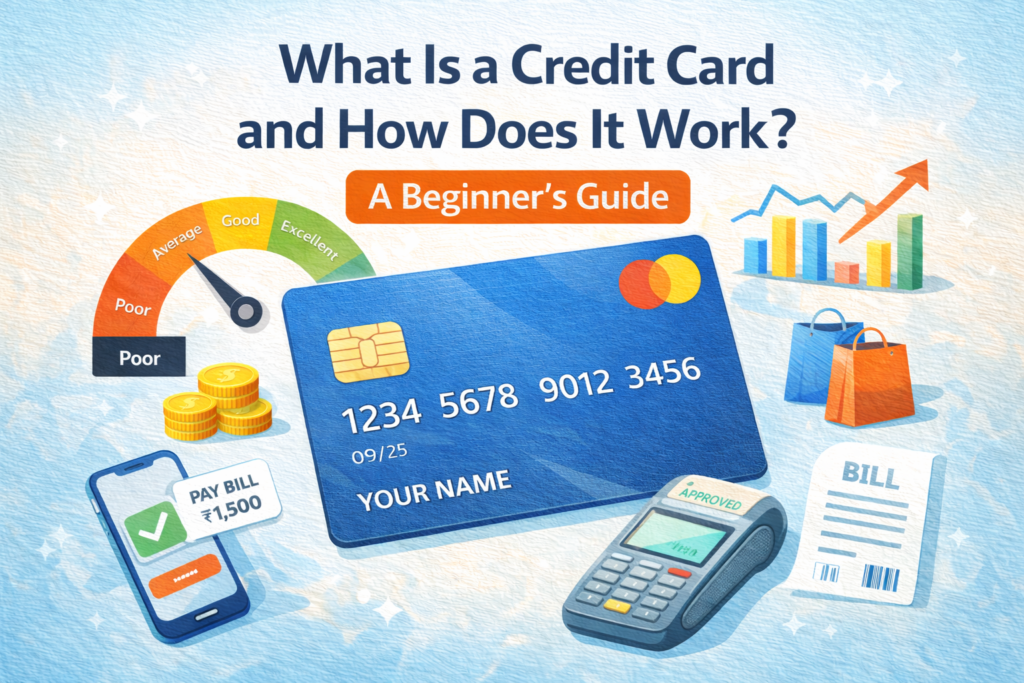
A credit card is a payment card issued by a bank or financial institution that allows you to borrow money up to a fixed limit to make purchases or payments. Instead of paying immediately from your bank account, you repay the borrowed amount later.
The bank sets a credit limit, which is the maximum amount you can spend using the card. You can use the card repeatedly as long as you repay the used amount within the allowed limit.
How Does a Credit Card Work?
When you use a credit card, the bank pays the merchant on your behalf. You then repay the bank either in full or partially by a specified due date.
Key Steps in Credit Card Usage
- You make a purchase using the credit card
- The bank records the transaction
- The amount is added to your monthly bill
- You repay the bill by the due date
If you pay the full amount on time, you usually avoid interest charges.
Important Credit Card Terms Explained
Credit Limit
The maximum amount you can spend using your credit card.
Billing Cycle
The time period during which your transactions are recorded, usually around 30 days.
Statement Date
The date on which your credit card bill is generated.
Due Date
The last date to pay your bill without penalty.
Minimum Due
The smallest amount you must pay to avoid late fees, though paying only the minimum increases interest costs.
Interest-Free Period
One major benefit of credit cards is the interest-free period, usually between 20 and 50 days.
If you pay the total bill within this period, you do not pay any interest. However, if you carry forward a balance, interest is charged from the transaction date.
Types of Credit Cards
There are different types of credit cards designed for various needs.
Standard Credit Cards
Basic cards suitable for everyday use.
Rewards Credit Cards
Offer reward points for every purchase.
Cashback Credit Cards
Provide a percentage of your spending as cashback.
Travel Credit Cards
Offer travel-related benefits like airline miles and lounge access.
Secured Credit Cards
Issued against a fixed deposit, ideal for beginners or those with low credit scores.
Fees and Charges to Know
Annual Fee
Some cards charge a yearly fee, while others are lifetime free.
Interest Charges
Applied when you don’t pay the full bill by the due date.
Late Payment Fee
Charged if payment is missed or delayed.
Cash Withdrawal Fee
Charged when you withdraw cash using the card.
Understanding these fees helps avoid unnecessary expenses.
Benefits of Using a Credit Card
Convenience
Easy to use for online and offline payments.
Emergency Support
Helpful during unexpected expenses.
Credit Score Improvement
Timely payments improve your credit score.
Rewards and Offers
Earn rewards, cashback, or discounts.
Purchase Protection
Some cards offer insurance or protection on purchases.
Risks of Misusing Credit Cards
While credit cards are useful, misuse can cause problems.
Common Risks
- Overspending
- High interest charges
- Debt accumulation
- Negative impact on credit score
Using credit cards without planning can lead to long-term financial stress.
How Credit Cards Affect Your Credit Score
Your credit card usage plays a major role in your credit score.
Positive Impact
- Paying bills on time
- Keeping credit utilization low
Negative Impact
- Missing payments
- Using most of your credit limit
- Frequent applications for new cards
Responsible usage helps maintain a strong credit profile.
Tips for Beginners to Use Credit Cards Safely
1. Spend Only What You Can Repay
Treat credit card spending like cash spending.
2. Pay Full Amount Every Month
Avoid paying only the minimum due.
3. Keep Credit Utilization Low
Try to use less than 30% of your credit limit.
4. Set Payment Reminders
Never miss a due date.
5. Avoid Cash Withdrawals
Cash advances attract high fees and interest.
Credit Card vs Debit Card
Many beginners confuse credit cards with debit cards.
| Feature | Credit Card | Debit Card |
|---|---|---|
| Money Source | Borrowed | Bank account |
| Interest | Yes (if unpaid) | No |
| Credit Score Impact | Yes | No |
| Rewards | Often available | Limited |
Both have their uses, but credit cards require more discipline.
Common Myths About Credit Cards
Myth 1: Credit cards are bad
Reality: Responsible usage makes them beneficial.
Myth 2: Paying minimum due is enough
Reality: It increases interest and debt.
Myth 3: Income affects credit score
Reality: Repayment behavior matters more.
FAQs About Credit Cards
Is a credit card good for beginners?
Yes, if used responsibly and within limits.
Can I avoid interest completely?
Yes, by paying the full bill on time.
Does using a credit card increase debt?
Only if spending is not controlled.
How many credit cards should a beginner have?
One card is usually enough to start.
Conclusion
A credit card is a powerful financial tool when used correctly. It offers convenience, rewards, and helps build a strong credit history. However, misuse can lead to debt and financial stress.
For beginners, understanding how credit cards work, paying bills on time, and controlling spending are essential habits. When managed responsibly, a credit card can support your financial growth rather than harm it.
Disclaimer
This article is for educational purposes only and does not constitute financial advice. Always read your card’s terms and conditions before use.