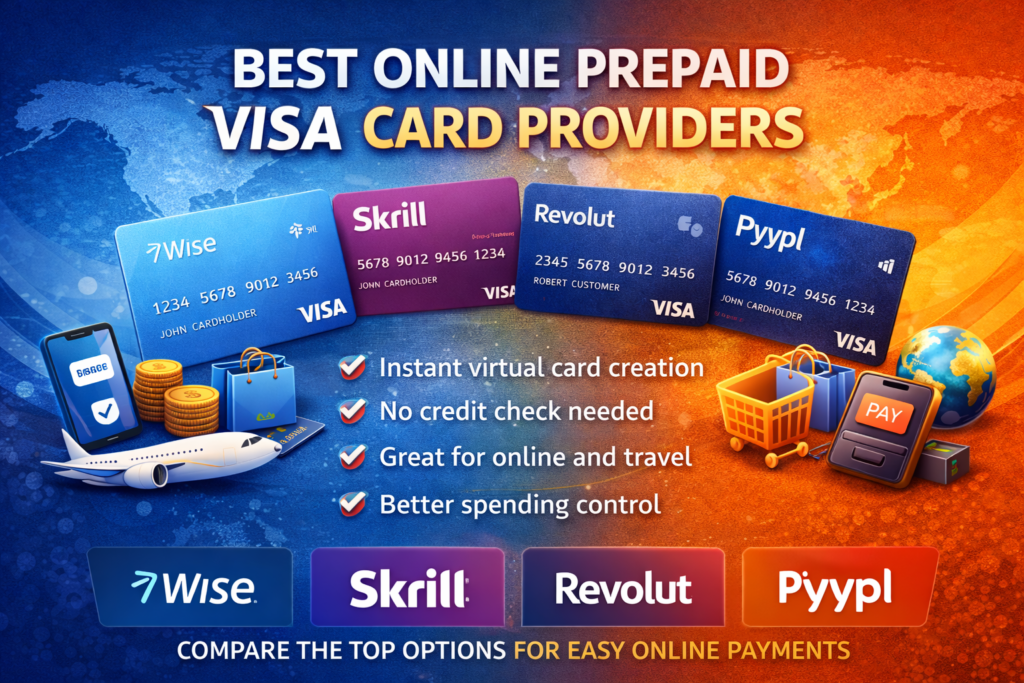
Prepaid Visa cards and virtual Visa cards are a great way to shop online, control spending, and protect your main bank account from exposure. This guide walks you through the best online prepaid Visa card providers, how they work, their strengths and weaknesses, and practical tips for choosing the right one. Wherever possible I’ve linked to official product pages and up-to-date resources so you can sign up safely. Visa
Why choose an online prepaid Visa card?
Online/virtual prepaid Visa cards are popular because they:
- Let you spend only what you load — excellent for budgeting and trial subscriptions.
- Provide an extra layer of security: if a merchant is compromised, your main account isn’t exposed.
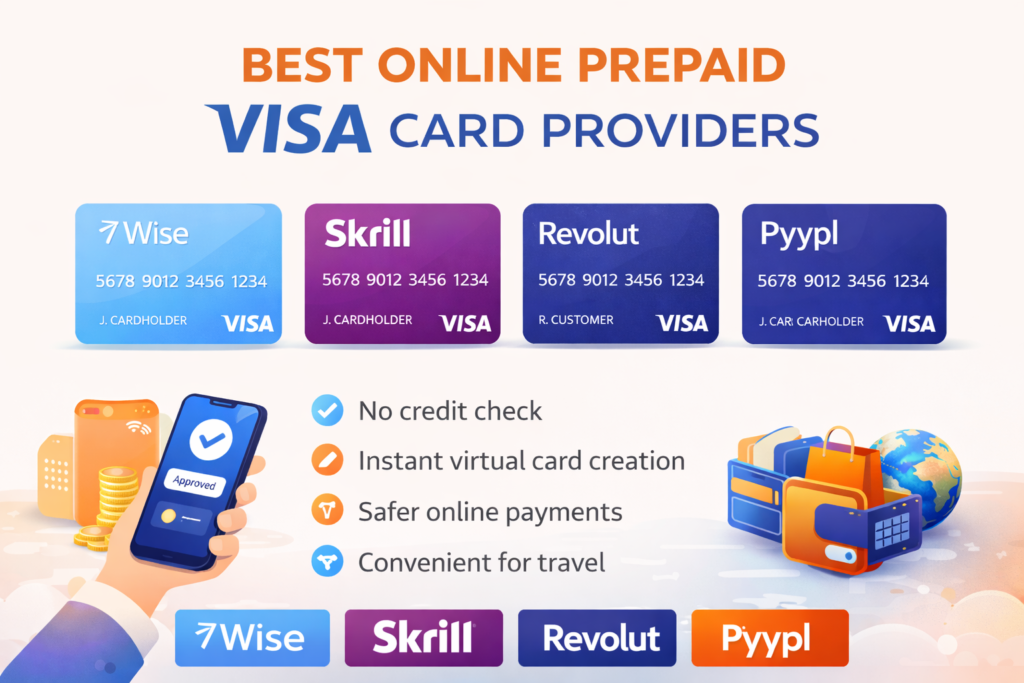
- Usually require no credit check and can be issued quickly from an app.
- Often integrate with Google Pay / Apple Pay for contactless or in-app purchases.
Below you’ll find the top providers, each with a short review, who it’s best for, and any notable caveats.
1) Pyypl — quick, app-first prepaid Visa
Overview: Pyypl is an app-centric fintech that issues instantly usable virtual Visa cards in supported markets. It’s designed for people who want a simple, no-bank-account way to pay online or send money. Pyypl emphasizes quick signup and low friction top-ups.
Best for: Users in Pyypl’s supported countries who want a no-nonsense virtual Visa for everyday online spending and transfers.
Pros
- Fast virtual card issuance in the app.
- No salary or bank account required in many regions.
- Good merchant acceptance (Visa network).
Cons
- Geographic availability is limited — check if it’s offered in your country.
- Fees and limits can vary by market; always check the fee schedule in the app.
2) Skrill — established wallet with virtual Visa option
Overview: Skrill (part of Paysafe Group) offers a virtual prepaid visa card in many markets. The virtual card is created from your Skrill wallet balance and can be added to digital wallets or used for online checkouts. Skrill markets the card to people who already use its wallet for transfers and gambling/payment sites.
Best for: Users who already use Skrill for transfers, deposits, or want a quick virtual card linked to their wallet balance.
Pros
- Instant virtual card activation for approved accounts.
- Works where Visa is accepted online; integrates with Skrill ecosystem.
- Useful for users who want to keep merchant charge activity isolated.
Cons
- Fees (top-up, inactivity, or currency conversion) can apply depending on account level and country.
- Availability of the virtual Visa varies — check your local Skrill support pages.
3) Wise — multi-currency virtual debit (Visa-branded in many regions)
Overview: Wise (formerly TransferWise) offers virtual debit cards that behave like prepaid cards because you can only spend the balance you hold in your Wise account. Wise is particularly strong for multi-currency spending and transparent mid-market exchange rates. You can create and freeze virtual cards in the app.
Best for: Frequent travellers and people who make purchases in multiple currencies and want the mid-market rate.
Pros
- Transparent exchange rates and low conversion fees.
- Ability to hold multiple currencies and spend from a chosen balance.
- Option to freeze or delete a virtual card after use.
Cons
- Virtual debit card may be limited in functionality in some countries.
- Not every merchant or region accepts virtual/debit cards for certain transactions (e.g., car hire deposits) — test before relying on it for travel.
4) Revolut — flexible virtual and disposable cards
Overview: Revolut’s app supports virtual cards, including disposable single-use cards that automatically rotate card details after a transaction. Revolut is popular for quick issuance, multi-currency support, and advanced security controls. Recent product updates continue to expand virtual card availability.
Best for: Users who want disposable cards for one-time purchases (great for trial subscriptions) and robust in-app controls.
Pros
- Instant virtual card creation, including single-use (disposable) cards.
- Strong app controls: freeze/unfreeze, set limits, block merchant categories.
- Competitive exchange rates on paid plans.
Cons
- Free tier may limit the number of disposable cards or impose currency conversion fees.
- Regulatory availability varies by country — check local Revolut terms.
5) iCard — European app with multiple virtual cards
Overview: iCard is a Europe-focused digital wallet that issues virtual Visa and Mastercard cards immediately after signup. It’s a neat option if you want multiple virtual cards (e.g., separate cards per subscription or merchant) and strong categorization tools.
Best for: European users who want multiple virtual cards and a simple budgeting interface.
Pros
- Multiple virtual cards per account.
- Clear UI for managing cards and transactions.
- Useful for splitting subscriptions or recurring payments.
Cons
- Mainly targeted at EU/EEA residents.
- Some premium features behind subscription tiers.
6) Neteller / Net+ (and similar e-wallets) — virtual card tied to wallet balance
Overview: Neteller’s Net+ Virtual Prepaid cards let you spend your wallet balance online. These solutions are similar to Skrill and are commonly used in gaming, forex, and online markets.
Best for: Users who already use Neteller for transfers and want an online card separate from bank accounts.
Pros & Cons mirror Skrill: instant cards linked to wallet balance, but watch for fees and regional availability.
7) Regional/local providers (Paysafe/Paysafecard, banks, telco cards)
Overview: In many countries local fintechs, neobanks, or even telecom companies issue prepaid Visa cards (physical and virtual). Examples include Paysafe’s ecosystem (which has been evolving its card products) and country-specific bank reloadable prepaid Visas.
Best for: Users who prefer a provider that supports cash top-ups at local outlets or has local customer support.
Tip: Always verify local regulatory compliance (RBI, FCA, etc.) and whether the provider reports to local authorities if that matters to you.
How to choose the right prepaid Visa provider
- Instant issuance: If you need a card immediately for online checkout, prefer providers that give virtual card details instantly (Pyypl, Revolut, iCard, Wise).
- Fees & exchange rates: Check top-up, monthly, inactivity and conversion fees. Wise is near mid-market FX; others may charge more.
- Top-up options: Bank transfer, debit card, cash (regional), or third-party payments — choose what’s convenient for you.
- Mobile wallet support: If you want contactless in-store or in-app payments, confirm Apple Pay / Google Pay support.
- Limits and KYC: Prepaid cards often have tiered limits requiring ID verification for higher balances or top-ups.
- Use case: For travel and multi-currency spending, Wise and Revolut are strong. For one-time online purchases, disposable virtual cards (Revolut, iCard) shine.
Safety tips and common pitfalls
- Only sign up at the official website or app store listing; beware of phishing sites.
- Don’t keep large balances on prepaid cards — load what you need.
- If a provider lets you create single-use or disposable cards, use them for unfamiliar merchants.
- Understand chargeback and dispute policies — prepaid cards can sometimes be harder to dispute than credit cards.
- Check whether the issuer supports refunds to the virtual card (some merchants refund, but the issuer’s policy varies).
Quick comparison table
| Provider | Virtual card? | Disposable cards | Best for | Notable caveat |
|---|---|---|---|---|
| Pyypl | Yes | No | Fast local virtual Visa | Regional availability. |
| Skrill | Yes | No | Wallet users | Fees vary by region. |
| Wise | Yes | Limited | Multi-currency spending | Card tied to Wise balance. |
| Revolut | Yes | Yes (disposable) | Security & disposable cards | Free tier limits. |
| iCard | Yes | Yes | Multiple virtual cards | EU focus. |
| Neteller/Net+ | Yes (Mastercard) | No | Wallet linked spending | Mostly Mastercard; similar model. |
Final thoughts
Online prepaid Visa cards are a practical tool for safer online shopping, subscription management, and international spending without exposing your primary bank account. For most users:
- Use Revolut or iCard if you want disposable/specialized virtual cards and strong app controls.
- Choose Wise if you need low-cost multi-currency spending and transparent FX.
- Pick Pyypl or Skrill if you prefer a wallet that issues instant virtual cards in your market.