
Introduction
A Loan EMI Calculator is a common financial tool used to meet personal, business, or housing needs. When you take a loan, banks or financial institutions typically ask for repayment in Equated Monthly Installments (EMIs). Understanding EMIs and how they are calculated is crucial for smart financial planning.
Many borrowers struggle with EMI calculations and may end up paying higher interest than necessary. A loan EMI calculator simplifies this process and helps you plan your budget efficiently. This guide will explain how EMIs work, the formula behind them, factors affecting your EMIs, and how to use an EMI calculator effectively.
What Is an EMI?
EMI stands for Equated Monthly Installment, the fixed amount you pay every month to repay a loan. It includes two main components:
- Principal Amount: The actual borrowed amount.
- Interest: The cost of borrowing the principal from the lender.
The EMI remains constant throughout the loan tenure, making budgeting easier. EMIs are commonly used for:
- Home loans
- Personal loans
- Car loans
- Education loans
Why Understanding EMIs Is Important
Knowing your EMI helps in:
- Planning monthly finances
- Avoiding over-borrowing
- Comparing loan offers
- Choosing the right loan tenure
- Reducing interest costs
Without understanding EMIs, borrowers may end up taking loans that are difficult to repay or paying more interest than necessary.
Components of an EMI
1. Principal
The principal is the original amount borrowed from the bank or lender. The higher the principal, the higher the EMI.
2. Interest
Interest is the cost of borrowing. It depends on:
- Type of loan (fixed or floating interest)
- Annual interest rate
- Loan tenure
3. Loan Tenure
Loan tenure is the period over which you repay the loan. Longer tenure reduces monthly EMIs but increases total interest paid. Shorter tenure increases EMIs but reduces total interest.
EMI Calculation Formula
The standard formula used to calculate EMI is:EMI=(1+r)n−1P×r×(1+r)n
Where:
- P = Principal loan amount
- r = Monthly interest rate (Annual rate ÷ 12 ÷ 100)
- n = Loan tenure in months
This formula ensures a fixed monthly installment that covers both principal and interest.
Example of EMI Calculation
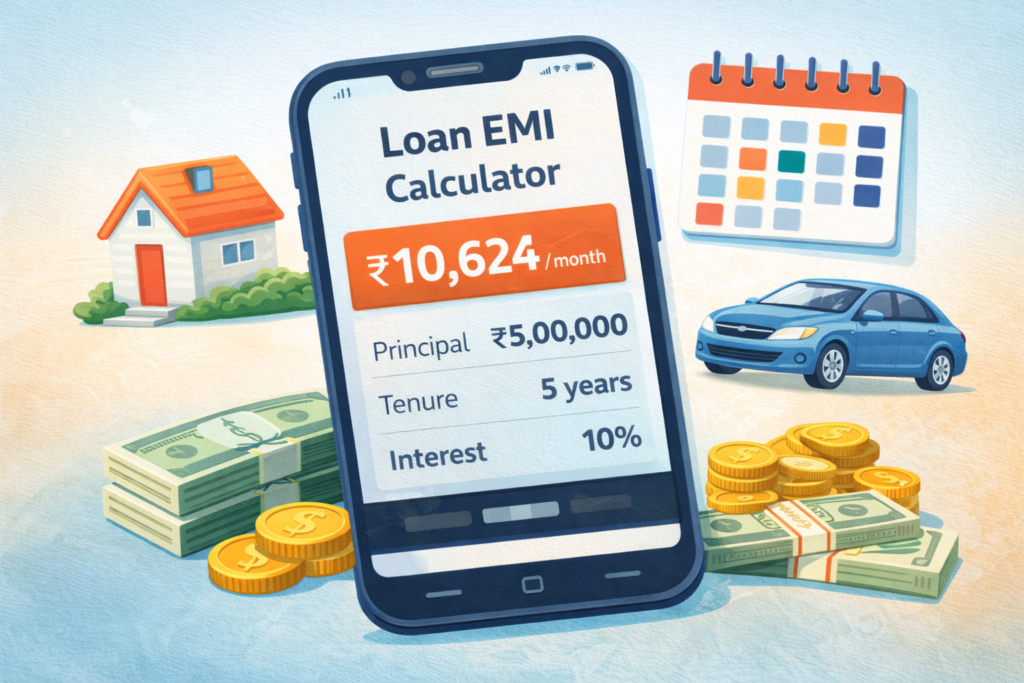
Suppose you take a personal loan of ₹5,00,000 at 10% annual interest for 5 years (60 months).
- Principal (P) = ₹5,00,000
- Monthly interest rate (r) = 10 ÷ 12 ÷ 100 = 0.00833
- Tenure (n) = 60 months
EMI = ₹10,624 approximately
This shows how knowing the EMI beforehand helps in planning monthly expenses effectively.
How a Loan EMI Calculator Works
A loan EMI calculator automates this calculation. You need to input:
- Loan amount
- Interest rate
- Loan tenure
The calculator provides:
- Monthly EMI
- Total interest payable
- Total payment over loan tenure
Using an EMI calculator saves time and helps you make informed decisions.
Factors Affecting Your EMI
1. Interest Rate
A higher interest rate increases EMI. Fixed-rate Loan EMI Calculator keep EMIs stable, while floating rates may vary with market conditions.
2. Loan Tenure
Longer tenure reduces EMI but increases total interest paid. Shorter tenure increases EMI but saves on interest.
3. Principal Amount
EMI is directly proportional to the loan amount. Borrow only what you need.
4. Prepayments
Making prepayments reduces principal and future interest, lowering EMIs for the remaining tenure.
Benefits of Using an EMI Calculator
- Budget Planning: Helps in estimating monthly commitments.
- Loan Comparison: Compare different banks’ offers to find the best deal.
- Interest Savings: Evaluate different tenures and interest rates to minimize total interest.
- Quick Calculations: Instantly calculate EMIs without manual formulas.
Tips for Managing EMIs Effectively
1. Borrow Responsibly
Ensure your EMI does not exceed 30–40% of your monthly income to maintain financial stability.
2. Prepay When Possible
Even small prepayments can reduce the total interest significantly.
3. Choose the Right Tenure
Balance between affordable EMIs and total interest paid.
4. Monitor Interest Rate Changes
For floating-rate loans, keep track of interest rate fluctuations to plan finances better.
EMI vs Total Interest
It’s important to understand the relationship between EMI and total interest paid.
- Longer Tenure: Lower EMI, higher total interest
- Shorter Tenure: Higher EMI, lower total interest
Deciding the right tenure depends on your monthly income and repayment capacity.
Common Misconceptions About EMIs
- Misconception 1: EMIs are only for banks.
- Reality: EMIs can also apply to NBFCs, fintech loans, and online lenders.
- Misconception 2: Longer tenure is always better.
- Reality: Longer tenure reduces EMIs but increases overall interest.
- Misconception 3: EMIs include only principal.
- Reality: EMIs include both principal and interest components.
FAQs About Loan EMIs
1. Can I change my EMI after loan disbursal?
Yes, many banks allow EMI restructuring or tenure extension based on your financial situation.
2. How does prepayment affect EMI?
Prepayment reduces the principal, lowering future EMIs and interest.
3. Is EMI calculation same for all loans?
Yes, the formula remains same, but interest rates and compounding may vary slightly.
4. Can I use EMI calculators for multiple loans?
Yes, you can calculate EMIs for multiple loans to manage total monthly obligations.
Conclusion
Understanding loan EMIs is essential for financial planning and borrowing wisely. With the help of an EMI calculator, you can determine your monthly obligations, compare loan offers, and choose the most suitable option.
By managing EMIs responsibly, making prepayments when possible, and selecting the right tenure, you can save money on interest and maintain financial stability. Using an EMI calculator is a simple, yet powerful tool to stay in control of your loans.
Disclaimer
This article is for informational purposes only and does not constitute financial advice. Always consult your bank or financial advisor before making loan decisions.