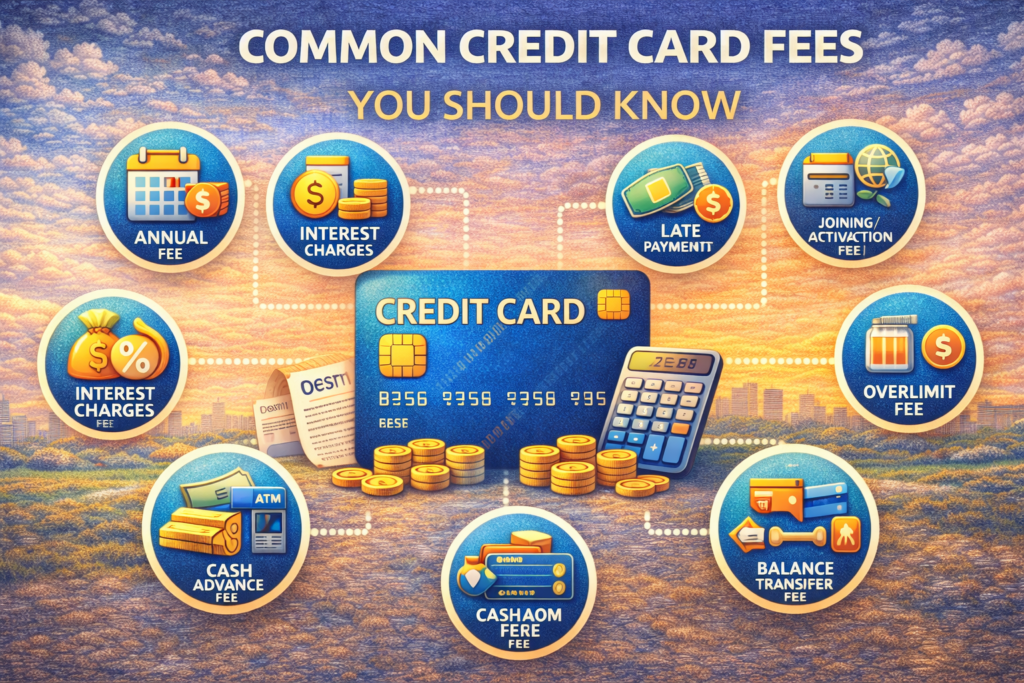
Credit cards are convenient financial tools that offer flexibility, rewards, and short-term credit. When used responsibly, they can help manage expenses, build credit history, and earn benefits such as cashback or reward points. However, many cardholders are surprised by unexpected charges that appear on their statements. These charges often come from credit card fees that are mentioned in the terms and conditions but are not always fully understood.
Understanding common credit card fees is essential to avoid unnecessary costs and use credit cards wisely. By knowing how and when these fees apply, cardholders can plan spending better, pay on time, and reduce overall expenses.
This article explains the most common credit card fees you should know, how they work, and simple ways to avoid or minimize them.
Why Credit Card Fees Exist
Credit card fees exist to cover the costs of providing credit, managing transactions, and handling risks such as late payments or defaults. While some fees are unavoidable, many can be avoided with responsible card usage.
Banks and card issuers clearly list these fees in the card’s pricing and terms. Being aware of them helps users make informed decisions and choose cards that suit their spending habits.
Annual Fee
The annual fee is a charge that some credit cards apply every year for using the card.
Key Points
- Charged once a year
- Amount varies depending on card type
- Premium cards usually have higher annual fees
Why It Is Charged
Annual fees help cover benefits such as rewards, insurance, and customer services.
How to Avoid It
- Choose lifetime free cards
- Use cards that waive the fee upon meeting spending conditions
Joining or Activation Fee
Some cards charge a one-time joining or activation fee when the card is issued.
Details
- Charged only in the first year
- Usually applies to premium or rewards cards
Tip
Always check if the joining fee is separate from the annual fee.
Interest Charges
Interest is one of the most important costs associated with credit cards.
How Interest Works
- Applied when the outstanding balance is not paid in full
- Calculated daily or monthly
- Rates are usually higher than other loan types
Impact
Interest charges can significantly increase the cost of purchases if balances are carried forward.
How to Avoid
- Pay the full statement balance on time
- Avoid using credit cards for long-term borrowing
Late Payment Fee
A late payment fee is charged when the minimum amount due is not paid by the due date.
Features
- Fixed or percentage-based fee
- May increase with repeated delays
- Can negatively affect credit score
Avoidance Tip
Set payment reminders or enable auto-debit to avoid missing due dates.
Overlimit Fee
An overlimit fee applies when spending exceeds the assigned credit limit.
Key Information
- Charged per billing cycle
- Indicates overuse of credit
Why It Matters
Exceeding the credit limit can lead to penalties and may affect creditworthiness.
Cash Advance Fee
Credit cards allow users to withdraw cash, but this comes at a cost.
Cash Advance Charges
- Flat fee or percentage of withdrawn amount
- Interest starts immediately
- No interest-free period
Recommendation
Avoid cash withdrawals using credit cards unless absolutely necessary.
Foreign Transaction Fee
This fee is charged on transactions made in foreign currencies.
When It Applies
- International purchases
- Online payments to foreign merchants
Typical Charges
- Percentage of the transaction amount
- Includes currency conversion cost
How to Reduce
Use cards designed for international use with low or zero foreign transaction fees.
Balance Transfer Fee
A balance transfer fee applies when transferring outstanding balances from one card to another.
Purpose
- Used to consolidate debt
- Often comes with promotional interest rates
Cost
- Charged as a percentage of transferred amount
EMI Conversion Fee
Some cards allow conversion of purchases into monthly installments.
EMI Charges Include
- Processing or conversion fee
- Interest (in some cases)
Important Note
Zero-interest EMIs may still include processing fees.
Reward Redemption Fee
Some issuers charge a fee for redeeming reward points.
Examples
- Cashback redemption fee
- Gift voucher processing fee
Tip
Check redemption terms before accumulating rewards.
Card Replacement Fee
This fee is charged when a card needs replacement due to loss or damage.
Applicable When
- Lost or stolen cards
- Physical damage
Some banks waive this fee for premium customers.
Duplicate Statement Fee
A charge may apply if a cardholder requests a physical or duplicate statement.
Avoidance Tip
Use online statements to avoid extra charges.
Add-On Card Fee
Add-on cards issued for family members may come with additional fees.
Key Points
- May be free or chargeable
- Depends on card type and issuer
Penalty Interest Rate
Repeated late payments may trigger a higher interest rate.
Impact
- Higher cost of borrowing
- Difficult to reduce without consistent repayment
Responsible usage helps avoid penalty rates.
Service Tax or Applicable Taxes
Credit card fees may attract additional taxes as per local laws.
Important Note
Taxes increase the total cost of fees charged.
How to Minimize Credit Card Fees
Reducing fees requires awareness and discipline.
Best Practices
- Pay bills on time
- Stay within credit limit
- Avoid cash advances
- Read card terms carefully
- Choose cards that match spending habits
Small changes can save significant money over time.
Choosing a Credit Card With Fewer Fees
Before applying for a credit card, consider:
- Annual and joining fees
- Interest rates
- Foreign transaction fees
- Reward redemption charges
Comparing multiple cards helps identify the most cost-effective option.
Importance of Understanding Credit Card Fees
Knowing credit card fees helps users:
- Avoid unexpected charges
- Use credit responsibly
- Improve financial planning
- Maintain a healthy credit score
Awareness leads to smarter financial decisions.
Frequently Asked Questions (FAQs)
Are all credit cards charged an annual fee?
No, many cards are lifetime free or waive fees based on usage.
Do credit card fees affect credit score?
Indirectly, yes—late payments and overlimit usage can impact credit score.
Can credit card fees be reversed?
Some fees may be reversed upon request, depending on the issuer.
Is paying only the minimum amount a good idea?
Paying only the minimum increases interest costs over time.
Conclusion
Credit cards are powerful financial tools, but they come with various fees that users should clearly understand. From annual fees and interest charges to late payment and foreign transaction fees, these costs can add up quickly if ignored. Being aware of common credit card fees helps cardholders use credit responsibly and avoid unnecessary expenses.
By choosing the right card, paying dues on time, and monitoring statements regularly, users can enjoy the benefits of credit cards while keeping costs under control. Financial awareness is the key to making credit cards work in your favor.
Disclaimer
This article is for informational and educational purposes only. Credit card fees, terms, and charges vary by issuer and region. Always refer to the official card agreement for accurate and updated information.