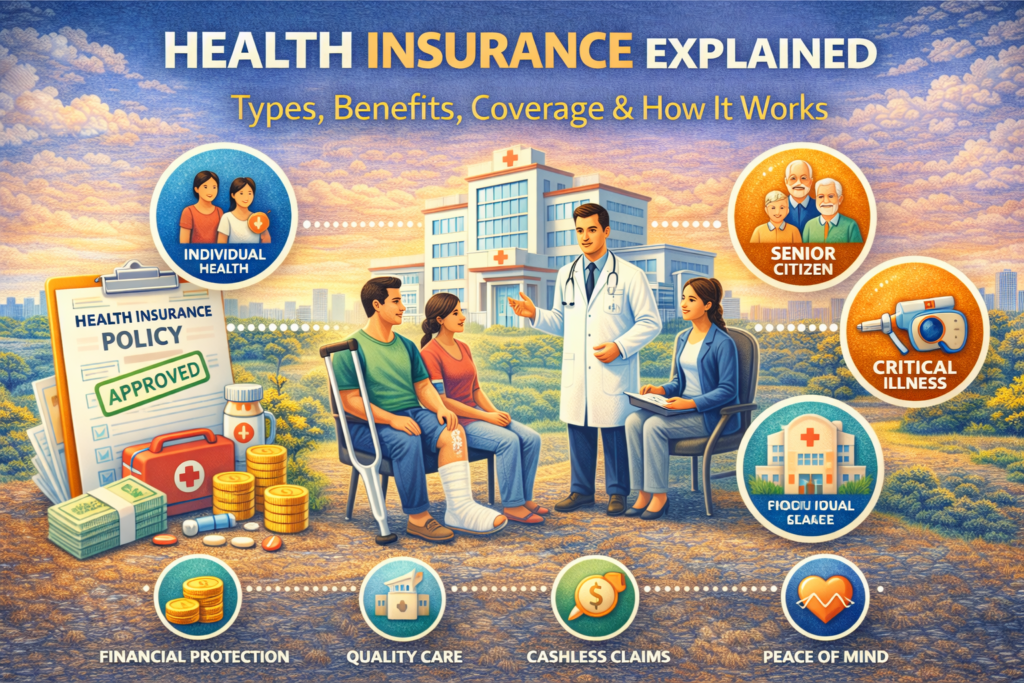
Health insurance has become an essential part of financial planning in today’s world. Rising medical costs, lifestyle-related illnesses, and unexpected health emergencies can put a heavy financial burden on individuals and families. Health insurance helps protect against these risks by covering medical expenses and ensuring access to quality healthcare without draining savings.
A health insurance policy acts as a financial safety net. By paying a relatively small amount as a premium, policyholders receive coverage for hospitalisation, treatment, and other healthcare-related costs. Understanding how health insurance works, its benefits, and the different types available helps individuals choose the right policy for their needs.
This article explains what health insurance is, how it works, types of health insurance, benefits, coverage, and key factors to consider, in a simple and beginner-friendly manner.
What Is Health Insurance?
Health insurance is a contract between an individual and an insurance company where the insurer agrees to cover medical expenses incurred due to illness, injury, or accidents. In exchange, the policyholder pays a regular premium, either monthly or annually.
The main purpose of health insurance is to reduce out-of-pocket medical expenses and provide financial support during health emergencies. Depending on the policy, coverage may include hospitalisation, surgeries, medicines, diagnostic tests, and sometimes preventive care.
How Health Insurance Works
Health insurance follows a straightforward process:
- The policyholder purchases a health insurance plan
- Regular premiums are paid to keep the policy active
- When medical treatment is needed, a claim is made
- The insurer pays expenses as per policy terms
- The policyholder pays any uncovered costs
Claims can be settled either through cashless treatment at network hospitals or through reimbursement after treatment.
Key Terms Used in Health Insurance
Understanding common health insurance terms helps avoid confusion.
- Premium: Amount paid to the insurer for coverage
- Sum Insured: Maximum amount the insurer will pay
- Claim: Request for coverage of medical expenses
- Network Hospital: Hospital tied up with the insurer
- Waiting Period: Time before certain benefits apply
- Deductible: Amount paid by the policyholder
Types of Health Insurance
Health insurance policies are available in various forms to suit different needs.
Individual Health Insurance
Individual health insurance covers a single person.
Features
- Dedicated coverage for one individual
- Suitable for single adults or senior citizens
- Customisable coverage options
This policy is ideal for people who want personalised coverage.
Family Floater Health Insurance
Family floater plans cover multiple family members under a single policy.
Covered Members
- Self
- Spouse
- Children
- Sometimes parents
The sum insured is shared among all members, making it cost-effective for families.
Senior Citizen Health Insurance
Designed specifically for elderly individuals.
Key Features
- Coverage for age-related illnesses
- Higher premiums
- Special benefits for senior healthcare needs
These plans help manage medical expenses during retirement.
Critical Illness Insurance
Critical illness policies provide a lump-sum payout upon diagnosis of serious illnesses.
Commonly Covered Illnesses
- Cancer
- Heart attack
- Stroke
- Kidney failure
The payout can be used for treatment or recovery-related expenses.
Group Health Insurance
Group health insurance is usually provided by employers.
Benefits
- Lower premiums
- Coverage for employees and sometimes dependents
- Basic medical coverage
Employees are advised not to rely solely on employer-provided insurance.
What Does Health Insurance Cover?
Coverage varies by policy, but commonly includes:
- Hospitalisation expenses
- Pre- and post-hospitalisation costs
- Surgery and treatment charges
- Diagnostic tests
- Day-care procedures
Some plans also cover preventive checkups and wellness benefits.
What Is Not Covered (Exclusions)
Health insurance policies also have exclusions.
Common Exclusions
- Cosmetic procedures
- Non-medical treatments
- Self-inflicted injuries
- Certain pre-existing conditions (initially)
Understanding exclusions is important to avoid claim rejections.
Waiting Period in Health Insurance
Most health insurance policies include waiting periods.
Types of Waiting Periods
- Initial waiting period
- Pre-existing disease waiting period
- Specific treatment waiting period
After the waiting period ends, full coverage applies.
Benefits of Health Insurance
Health insurance offers several important benefits.
Financial Protection
Covers high medical expenses and reduces financial stress.
Access to Quality Healthcare
Enables treatment at reputable hospitals without delay.
Cashless Treatment
Allows treatment without upfront payment at network hospitals.
Peace of Mind
Reduces worry about medical emergencies.
Importance of Health Insurance
Health insurance is important because:
- Medical costs are rising rapidly
- Emergencies are unpredictable
- Savings alone may not be sufficient
- It protects long-term financial goals
Health insurance ensures financial stability during health crises.
Health Insurance vs Medical Savings
Health insurance and savings serve different purposes.
| Aspect | Health Insurance | Medical Savings |
|---|---|---|
| Purpose | Risk coverage | Expense planning |
| Cost | Premium-based | Lump-sum savings |
| Protection | High-cost treatments | Limited coverage |
Health insurance complements savings, not replaces them.
How to Choose the Right Health Insurance Plan
Before buying a policy, consider:
- Sum insured amount
- Network hospitals
- Premium affordability
- Policy exclusions
- Claim settlement process
Comparing multiple plans helps in making informed decisions.
Common Health Insurance Mistakes to Avoid
- Buying insufficient coverage
- Ignoring policy exclusions
- Delaying purchase
- Relying only on employer insurance
Avoiding these mistakes improves financial protection.
Digital Health Insurance
Health insurance services are increasingly digital.
Benefits of Online Health Insurance
- Easy comparison
- Quick purchase
- Paperless documentation
- Faster claim processing
Digital platforms have improved accessibility and transparency.
Role of Health Insurance in Financial Planning
Health insurance is a foundation of sound financial planning.
- Protects savings
- Prevents debt during emergencies
- Supports long-term financial goals
Without health insurance, financial plans remain vulnerable.
Frequently Asked Questions (FAQs)
Is health insurance mandatory?
It may not be legally mandatory everywhere, but it is strongly recommended.
Can one person have multiple health insurance policies?
Yes, multiple policies are allowed.
Does health insurance cover all diseases?
Coverage depends on policy terms and waiting periods.
Is cashless treatment available everywhere?
Only at network hospitals tied to the insurer.
Conclusion
Health insurance is no longer optional—it is a necessity in modern life. With increasing healthcare costs and unpredictable medical emergencies, having the right health insurance plan provides financial security and peace of mind. By covering hospitalisation, treatment, and related expenses, health insurance helps individuals focus on recovery rather than costs.
Understanding how health insurance works, its benefits, and the available options allows individuals and families to make informed choices. When chosen wisely, health insurance becomes a powerful tool for protecting health and financial well-being.
Disclaimer
This article is for informational and educational purposes only. Health insurance terms, coverage, and eligibility vary by insurer and region. Always read policy documents carefully before purchasing.