A personal loan is one of the most flexible and widely used financial products available today. Unlike loans that are restricted to a specific purpose, a personal loan Explained can be used for almost any personal financial need. From managing unexpected expenses to planning important life events, personal loans offer quick access to funds without requiring collateral.
Because personal loans are unsecured, lenders focus mainly on the borrower’s income, credit history, and repayment capacity. While interest rates may be higher compared to secured loans, the ease of access and flexibility make personal loans a popular choice among salaried and self-employed individuals.
This article personal loan Explained is, how it works, its types, eligibility, benefits, risks, and repayment process, in a simple and beginner-friendly way.
What Is a Personal Loan?
A personal loan is an unsecured loan provided by banks or financial institutions to individuals for personal use. Since no collateral is required, the lender approves the loan based on the applicant’s financial profile rather than assets.
Once approved, the loan amount is disbursed directly to the borrower’s bank account and repaid in fixed monthly installments over a predetermined period.
Common Uses of a Personal Loan
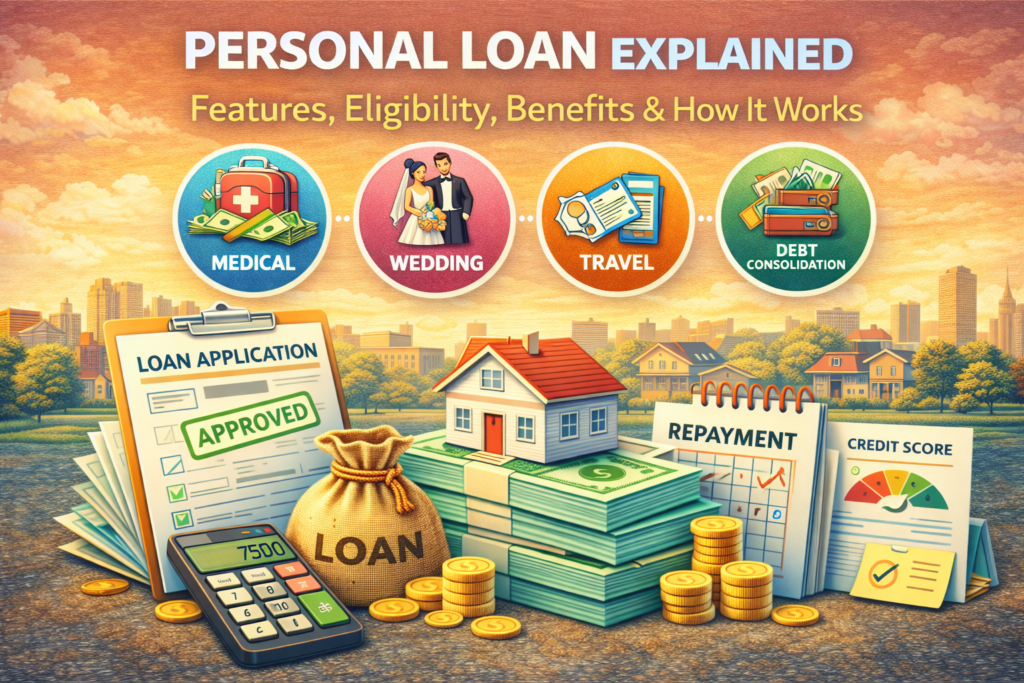
One of the biggest advantages of a personal loan is its flexibility. It can be used for various purposes, including:
- Medical emergencies
- Wedding or event expenses
- Travel and vacations
- Home repairs or renovations
- Debt consolidation
- Education-related expenses
- Emergency financial needs
Lenders usually do not ask how the money will be used.
Types of Personal Loans
Personal loans can be categorized based on usage or borrower profile.
1. Standard Personal Loan
A general-purpose loan with fixed tenure and monthly installments.
2. Medical Personal Loan
Used to cover hospital bills or healthcare-related expenses.
3. Travel Loan
Taken to finance domestic or international travel expenses.
4. Wedding Loan
Used to manage costs related to weddings and celebrations.
5. Debt Consolidation Loan
Helps combine multiple debts into one manageable loan.
Eligibility Criteria for Personal Loans
Eligibility criteria may vary by lender, but common factors include:
- Age of the applicant
- Monthly income
- Employment stability
- Credit score
- Existing debt obligations
Salaried professionals and self-employed individuals may both qualify, provided they meet income and credit requirements. personal loan Explained,
Documents Required for a Personal Loan
Most lenders require basic documentation.
Personal Documents
- Identity proof
- Address proof
- Photographs
Income Documents
- Salary slips or income statements
- Bank statements
- Tax-related documents (if required)
Documentation requirements are usually minimal compared to secured loans.
Interest Rates on Personal Loans
Personal loans typically have higher interest rates than secured loans because they involve higher risk for lenders.
Factors Affecting Interest Rates
- Credit score
- Income level
- Employment type
- Loan amount and tenure
- Lender’s policies
A good credit history can help secure better interest rates. personal loan Explained,
Personal Loan Tenure
Personal loans usually have shorter repayment periods.
- Tenure ranges from 1 to 5 years
- Shorter tenure means higher monthly payments but lower total interest
- Longer tenure reduces monthly burden but increases interest cost
Choosing the right tenure is important for financial stability.
How Personal Loan Repayment Works
Personal loans are repaid through Equated Monthly Installments (EMIs).
Each EMI includes:
- Principal repayment
- Interest component
EMIs remain fixed throughout the loan tenure, making budgeting easier.
Benefits of Personal Loans
Personal loans offer several advantages:
- No collateral required
- Quick approval and disbursal
- Flexible usage
- Fixed monthly payments
- Minimal documentation
These features make personal loans suitable for short-term financial needs.
Risks and Limitations of Personal Loans
Despite their benefits, personal loans have certain limitations.
Potential Risks
- Higher interest rates
- Impact on credit score if payments are missed
- Over-borrowing leading to financial stress
Borrowers should use personal loans responsibly. personal loan Explained,
Fixed Rate vs Floating Rate Personal Loans
Most personal loans have fixed interest rates, but some lenders may offer floating options.
Fixed Rate Loans
- Predictable EMIs
- Easier budgeting
Floating Rate Loans
- Rates may change with market conditions
- EMIs may increase or decrease
Understanding rate type helps in better planning.
How Credit Score Affects Personal Loan Approval
Credit score is one of the most important factors in loan approval.
- High credit score improves approval chances
- Low score may lead to higher interest rates or rejection
- Timely repayment improves credit profile
Maintaining a good credit score is essential for affordable borrowing.
Tips Before Applying for a Personal Loan
Before applying, consider the following:
- Evaluate repayment capacity
- Compare interest rates
- Check processing fees
- Read loan terms carefully
- Avoid multiple loan applications
Planning reduces financial risks.
Frequently Asked Questions (FAQs)
Is a personal loan secured or unsecured?
A personal loan is unsecured and does not require collateral.
Can self-employed individuals apply for personal loans?
Yes, subject to income verification.
Is prepayment allowed?
Some lenders allow early repayment with conditions.
How fast is a personal loan disbursed?
Disbursal is usually quick once approved.
Importance of Responsible Borrowing
Personal loans are useful financial tools when used wisely. Borrowers should ensure that loan repayments fit within their monthly budget and avoid unnecessary borrowing. Responsible usage helps maintain financial health and creditworthiness.
Conclusion
A personal loan offers flexibility, quick access to funds, and convenience for managing various personal financial needs. While it comes with higher interest rates compared to secured loans, the absence of collateral and simple application process make it attractive for many borrowers.
Understanding how personal loans work, their costs, and repayment responsibilities helps individuals make informed decisions. When used responsibly, a personal loan can provide financial relief and support without long-term stress.
Disclaimer
This article is for informational and educational purposes only. Personal loan terms, interest rates, and eligibility criteria vary by lender and region. Always review official lender information before applying.