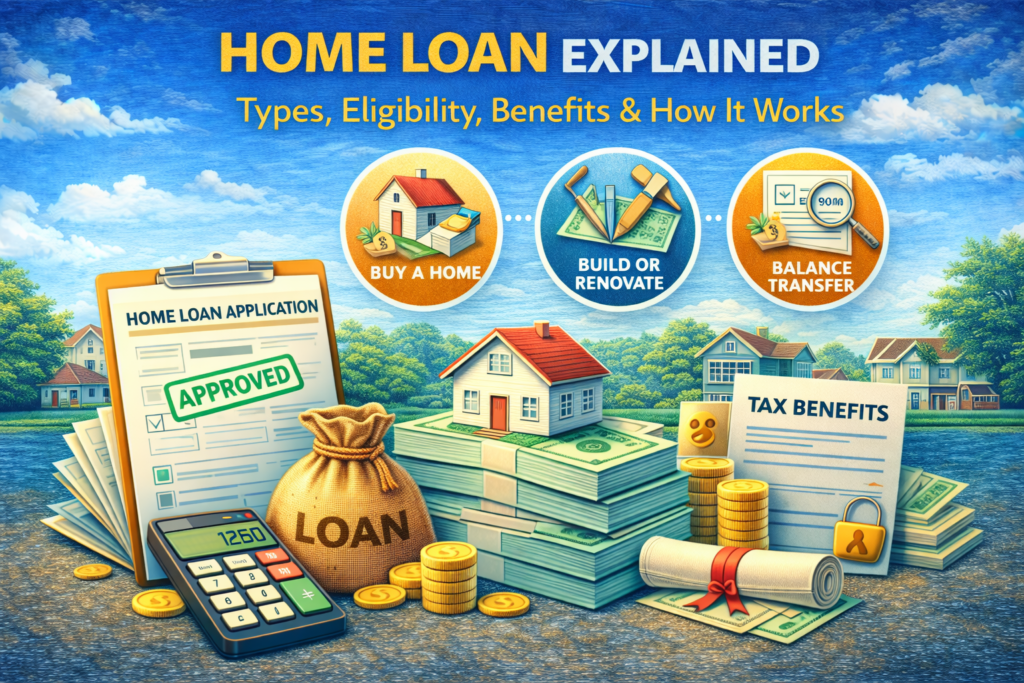
A home loan is one of the most important financial decisions in a person’s life. Buying a house is a long-term goal for many individuals and families, but the high cost of property often makes it difficult to pay in full. A home loan explained helps bridge this gap by allowing buyers to purchase or build a house while repaying the amount gradually over several years.
Home loans are offered by banks and financial institutions and usually come with lower interest rates compared to many other loan types. Because the property itself acts as security, lenders are able to offer longer repayment tenures and higher loan amounts. Understanding how a home loan works is essential before applying, as it involves long-term financial commitment.
This article explains what a home loan is, its types, eligibility, benefits, and repayment process, in a simple and beginner-friendly way.
What Is a Home Loan?
A home loan is a secured loan provided by a bank or financial institution to help individuals purchase, construct, renovate, or extend a residential property. The borrower repays the loan amount in monthly installments over a fixed period, along with interest.
Since the property is pledged as collateral, home loans generally have lower interest rates and longer repayment periods compared to unsecured loans. home loan explained
Types of Home Loans
Home loans are available in different forms based on purpose.
1. Home Purchase Loan
This is the most common type of home loan, used to buy a new or resale residential property.
Common uses:
- Buying an apartment or independent house
- Purchasing a ready-to-move or under-construction property
2. Home Construction Loan
This loan is taken to construct a house on owned land.
Key features:
- Loan amount is released in stages
- Funds are linked to construction progress
3. Home Improvement or Renovation Loan
Used to repair, renovate, or upgrade an existing house.
Examples:
- Interior remodeling
- Plumbing or electrical work
- Structural repairs
4. Home Extension Loan
Taken to extend an existing house, such as adding an extra room or floor.
5. Balance Transfer Home Loan
Allows borrowers to transfer an existing home loan to another lender offering lower interest rates or better terms. home loan explained
Eligibility Criteria for Home Loans
Eligibility varies by lender, but common factors include:
- Age of the applicant
- Monthly income and job stability
- Credit score and credit history
- Employment type (salaried or self-employed)
- Property value and location
A higher credit score and stable income generally improve approval chances.
Documents Required for a Home Loan
Typical documents include:
Personal Documents
- Identity proof
- Address proof
- Photographs
Income Documents
- Salary slips or income statements
- Bank statements
- Tax-related documents
Property Documents
- Sale agreement
- Property title documents
- Approved building plan
Document requirements may vary by lender.
Interest Rates on Home Loans
Home loan interest rates are usually lower than personal loans.
Types of Interest Rates
- Fixed rate: Interest remains constant for a certain period
- Floating rate: Interest changes based on market conditions
Borrowers should understand both options before choosing. home loan explained
Home Loan Tenure
Home loans typically have long repayment periods.
- Tenure may range from 10 to 30 years
- Longer tenure reduces monthly installments
- Shorter tenure reduces total interest paid
Choosing the right tenure depends on income stability and financial goals.
Benefits of Home Loans
Home loans offer several advantages:
- Makes home ownership affordable
- Lower interest rates
- Long repayment tenure
- Potential tax benefits (subject to laws)
- Builds long-term assets
Home loans are often considered good long-term financial tools.
Risks and Responsibilities
Despite benefits, home loans involve responsibilities:
- Long-term repayment commitment
- Risk of property loss if payments are missed
- Interest cost over time
Careful planning is essential before borrowing. home loan explained
How Home Loan Repayment Works
Repayment is usually done through Equated Monthly Installments (EMIs).
EMI includes:
- Principal repayment
- Interest component
As repayment progresses, the interest portion reduces while principal repayment increases.
Tips Before Applying for a Home Loan
- Check credit score
- Compare interest rates
- Assess repayment capacity
- Read loan terms carefully
- Avoid over-borrowing
Planning helps avoid financial stress.
Frequently Asked Questions (FAQs)
Is a home loan a secured loan?
Yes, the property acts as collateral.
Can self-employed individuals get home loans?
Yes, subject to income verification.
Is early repayment allowed?
Some lenders allow prepayment under certain conditions.
Conclusion
A home loan is a powerful financial tool that helps individuals achieve the dream of owning a house. With lower interest rates and longer repayment tenures, home loans make property ownership more accessible. However, because it is a long-term commitment, borrowers should carefully evaluate their financial capacity, understand loan terms, and plan repayments responsibly.
By choosing the right home loan and managing it well, borrowers can enjoy the benefits of home ownership without unnecessary financial pressure.
Disclaimer
This article is for informational and educational purposes only. Home loan terms, interest rates, and eligibility criteria vary by lender and region. Always check official lender information before applying.